
NEWS
US Strikes in Sokoto: Strategic Memory Over Borno’s Bloodshed
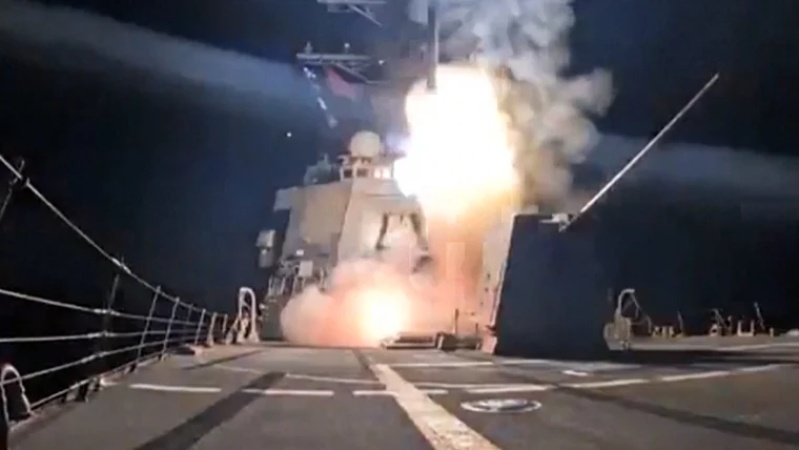
The recent decision by the United States military to initiate airstrikes in Sokoto State has ignited a sophisticated debate among bilateral affairs experts regarding the Pentagon’s tactical priorities in West Africa. While many expected a focus on the volatile North-East, the choice of the North-West has revealed a deeper reliance on historical operational success and regional intelligence architecture.
International human rights lawyer and bilateral affairs expert Emmanuel Ogebe suggests that the selection of Sokoto as the primary target reflects “strategic familiarity” rather than a direct response to the sheer scale of violence currently plaguing other parts of Nigeria. This insight challenges the assumption that military intervention is always dictated by the highest casualty counts on the ground.
At first glance, Sokoto appears to be a curious choice for an opening salvo. The state has not historically been the epicenter of global jihadist activity in Nigeria. That title remains held by the North-East, where the scars of Boko Haram and ISWAP remain fresh and where a devastating suicide bombing was recently recorded in Borno State. However, the US military operates on a logic of institutional memory and proven logistics.
Ogebe points back to the first term of President Donald Trump as a turning point for US operations in the region. In 2020, American special forces conducted a high-stakes mission in Sokoto to rescue Philip Walton, a US citizen who had been abducted and held by kidnappers. That operation resulted in the deaths of at least six terrorists and, more importantly, provided the US military with a detailed blueprint of the local terrain.
The North-West has essentially become a “safer operational bet” for American forces. The boots-on-the-ground experience gained during the Walton rescue created a reservoir of tactical knowledge that does not exist to the same degree in the North-East. When high-level military decisions are made, the presence of existing intelligence pathways often outweighs the immediate severity of local conflict.
Geography also plays a decisive role in this strategic calculus. Sokoto’s proximity to the Niger Republic cannot be ignored. Until very recently, the United States maintained a robust military presence and significant airbases within Niger. This proximity allowed for a seamless flow of intelligence and a refined understanding of the cross-border movement of insurgent groups.
Even as the US footprint in Niger fluctuates, the residual intelligence architecture remains a powerful asset. American forces are simply more comfortable operating in a landscape where they have already mapped the communication lines and physical obstacles. This familiarity reduces the margin for error in complex aerial operations.
The Nigerian government has been quick to frame these strikes as a collaborative effort. Official statements indicate that the operation was conducted jointly with the United States and other international allies. This narrative of cooperation is essential for maintaining national sovereignty while benefiting from advanced Western military technology and surveillance.
Ogebe views the claim of a joint operation as highly credible, largely due to the lessons learned from the 2020 rescue mission. That earlier operation reportedly came close to failure because of complications surrounding Nigerian airspace clearance. It appears that both Washington and Abuja have since prioritized a more synchronized approach to avoid the diplomatic and tactical friction of the past.
The shift toward the North-West also highlights the evolving nature of the threat in Nigeria. While the North-East has long been the face of the insurgency, the North-West has seen a terrifying rise in banditry and kidnapping-for-hire, often with blurred lines between criminal enterprises and ideological terrorism. By striking in Sokoto, the US may be signaling a broader commitment to stabilizing the entire Sahelian fringe.
This strategy suggests that the US is not merely chasing the loudest explosions but is instead targeting areas where its intervention has the highest probability of success. It is a pragmatic, if clinical, approach to counter-terrorism that prioritizes the safety of its assets and the reliability of its data over a reactive presence in the most violent zones.
As the dust settles on these initial strikes, the focus turns to whether this marks the beginning of a sustained campaign in the North-West. If the US continues to lean on its “institutional memory,” Sokoto and its neighboring states may see an increased frequency of such interventions. The challenge for the Nigerian military will be to effectively integrate this foreign support without becoming overly reliant on external airpower.
Ultimately, the Sokoto strikes serve as a reminder that in modern warfare, the “where” is often dictated by the “where we have been.” The ghosts of the 2020 rescue mission continue to guide American drones and jets today, proving that a single successful mission can define a regional strategy for years to come. For now, the North-West remains the centerpiece of a calculated American effort to maintain influence in an increasingly fractured West African security landscape.