
NEWS
Umahi Declares Biafra Agitation Obsolete Under Tinubu
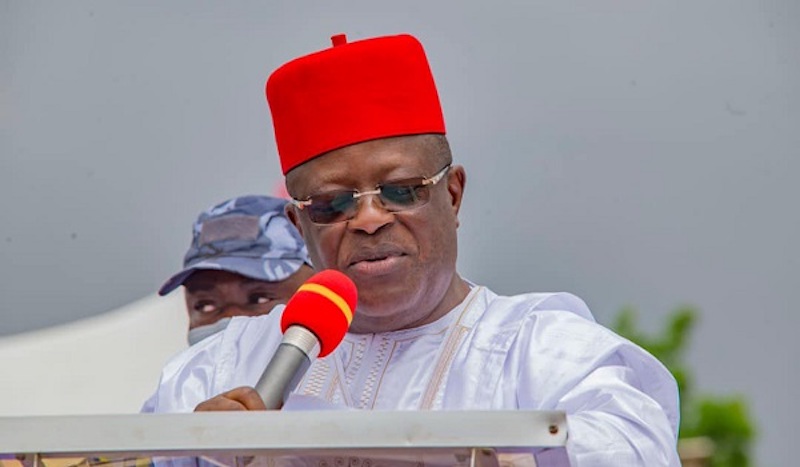
Minister of Works, David Umahi, has asserted that the persistent agitation for Biafra among segments of the population in the South-East region is no longer necessary. According to the Minister, the separatist sentiments that fueled the movement have been effectively nullified by the decisive actions of the current administration, which he credits with fully integrating the South-East into the Nigerian mainstream under President Bola Tinubu.
Umahi made the definitive remark on Monday during an extensive inspection tour of various ongoing federal infrastructure projects across the region. He maintained that the long-standing, palpable sense of marginalization and exclusion that previously served as the primary catalyst for separatist sentiments has significantly diminished. This change, he argued, is directly attributable to the renewed federal focus on addressing the infrastructure deficit, particularly through the aggressive construction and rehabilitation of key roadways and other vital projects across the five states of the zone.
“There will be no need for Biafra again,” Umahi declared. He directly contrasted the present situation with the past, explaining, “In the past administration, our people felt very much marginalised and that was the reason some people were agitating for Biafra. But I can say today that we are well integrated into the mainstream of the nation, Nigeria.” His statement suggests a strong belief that economic inclusion and equitable development are the most effective antidotes to separatist movements.
The Minister offered high praise for the Tinubu administration, stating unequivocally that the South-East is satisfied with the current level of federal inclusion and engagement. He underscored this sentiment by saying, “We are comfortable with President Bola Ahmed Tinubu. We are very happy with the integration.” He positioned the infrastructure drive as a tangible symbol of the federal government’s commitment to the region, translating political goodwill into visible, physical development.
To substantiate his claim of integration, Umahi went on to highlight numerous federal projects—both completed and ongoing—in the region. He lamented that many of these critical infrastructure works had been neglected and abandoned for more than a decade by previous governments before the current administration committed to reviving them. He gave a specific example of the challenges faced, stating, “For more than 15 years it has been one government will come and just do something and go.” He then provided an update on a major project, noting the financial commitment involved: “But the section being done by MTN under RCC is going to be completed by February fully and totally, and it is costing us ₦202 billion.” This level of investment and completion, he argued, is unprecedented and clearly signals the federal government’s dedication to ending the region’s historical neglect. Umahi concluded that the improved infrastructure is not only crucial for economic development but fundamentally serves as the practical evidence that the South-East is now an equal and fully acknowledged partner in the Nigerian federation.


