
METRO
Traffic Gridlock as Recovery Teams Battle Otedola Bridge Wreckage
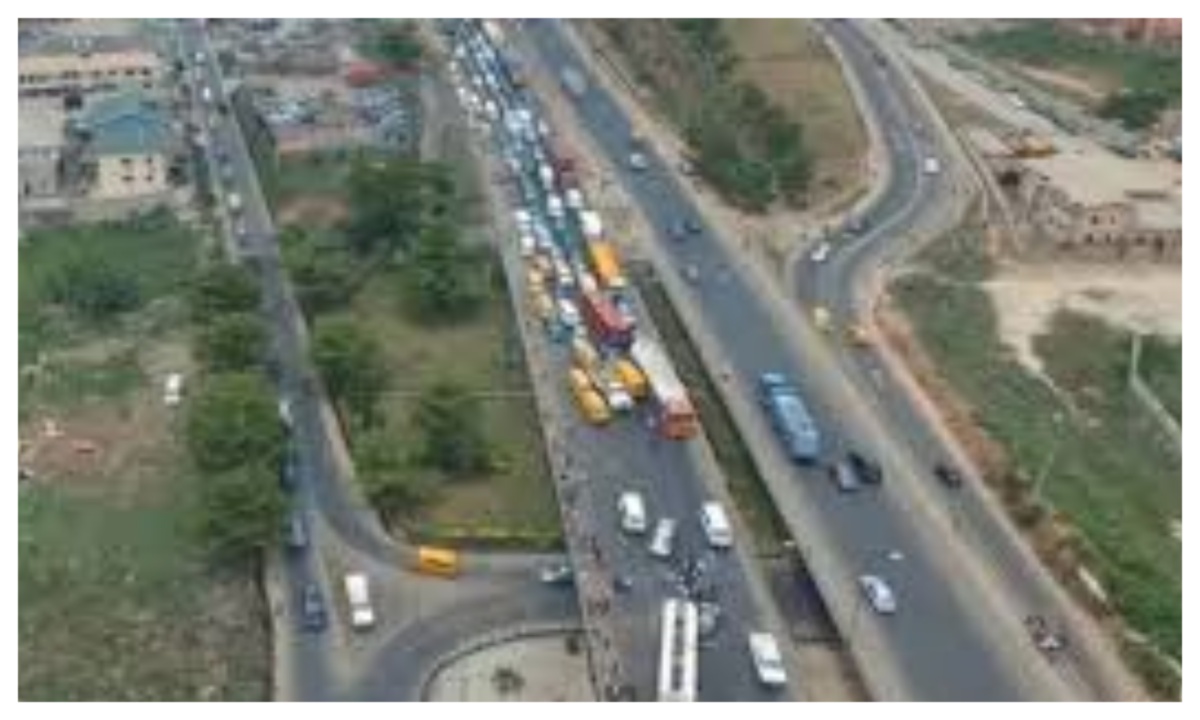
The pulse of the Lagos–Ibadan Expressway came to a grinding halt early Saturday morning as the Lagos State Traffic Management Authority (LASTMA) enforced a total shutdown of the Otedola Bridge. The emergency closure became a necessity following a high-stakes accident involving two 20-foot container trucks, both fully laden, which effectively barricaded one of the most critical arterial routes into the heart of Nigeria’s economic capital.
As the sun rose over the metropolis, commuters were met not with the usual Saturday flow but with a wall of stationary vehicles and the flashing lights of recovery teams. The incident, which unfolded around 6:30 a.m., saw one of the massive haulage trucks lose its balance and overturn on the bridge, heading inward toward the Secretariat. The resulting obstruction turned the expressway into a sprawling parking lot, with tailbacks stretching rapidly from the Berger axis toward the Oke hills.
Faced with the daunting task of uprighting and removing two heavy-duty containers, LASTMA officials took the tactical decision to suspend all vehicular movement on the bridge. This “surgical” closure was designed to provide the necessary workspace for high-capacity cranes and specialized flatbed trucks to operate without the risk of further accidents involving passing motorists.
The scene at Otedola Bridge was one of intense mechanical labor. Engineers and recovery specialists navigated the narrow confines of the bridge, coordinating the deployment of heavy-duty equipment to lift the fallen 20-footers. Video updates released by the agency throughout the morning showed the sheer scale of the operation, with the heavy cranes straining against the weight of the containers as officials worked to stabilize the wreckage.
In a statement aimed at de-escalating the growing frustration among road users, LASTMA emphasized that the closure was a non-negotiable safety measure. “Recovery of the two loaded 20-foot container trucks is currently in progress,” the authority explained. They noted that the bridge was shut specifically to enable safe operations, ensuring that the heavy lifting did not endanger the lives of the motoring public or the recovery crews on the ground.
To mitigate the inevitable chaos, traffic managers quickly mapped out a series of strategic diversions. Motorists approaching the city from the Lagos-Ibadan corridor were urged to pivot away from the bottleneck. The recommended detour advised drivers to exit the expressway at the Redeem Camp or Kara axis, filtering through Ogunusi Road toward Omole Junction. From there, they could connect to Agidingbi Road to navigate back toward their various destinations.
Despite these efforts, the ripple effect of the Otedola blockage felt significant. The bridge has long been a notorious flashpoint for accidents involving heavy-duty vehicles, and this latest incident reignited conversations about the safety of containerized haulage during peak hours. Traffic officers were deployed in significant numbers to manage the influx of vehicles at the diversion points, attempting to prevent the alternative routes from becoming equally choked.
The recovery operation was not merely about moving metal; it was a race against time to restore the city’s commercial flow. Every hour the bridge remained closed represented thousands of man-hours lost and a significant disruption to the logistics chain that feeds the Lagos markets. LASTMA assured the public that their officials remained on-site, working under high pressure to expedite the clearance process.
The agency’s leadership urged for patience, reminding drivers that the complexity of moving two fully loaded containers on an elevated bridge requires precision over speed. The risk of a secondary accident, should a container shift during the lifting process, remained a primary concern for the safety teams. Consequently, the “no vehicular movement” policy remained strictly enforced until the bridge was certified clear of debris and oil spills.
As the morning progressed, the sight of empty asphalt on the bridge stood in stark contrast to the bumper-to-bumper reality just a few hundred meters away. For many Lagosians, the Saturday morning commute became a test of endurance and navigational creativity. The incident serves as another sobering chapter in the ongoing challenge of managing heavy-duty traffic on the city’s aging infrastructure.
By midday, the recovery teams were still locked in their battle with the massive steel boxes, with the sound of hydraulic lifts echoing across the valley. LASTMA has promised to provide a final clearance update once the bridge is reopened, but until then, the Otedola Bridge remains a no-go zone, a silent testament to the precarious balance of the city’s transportation network.