
Entertainment
Tonto Dikeh Defends Tattoos After Spiritual Rebirth
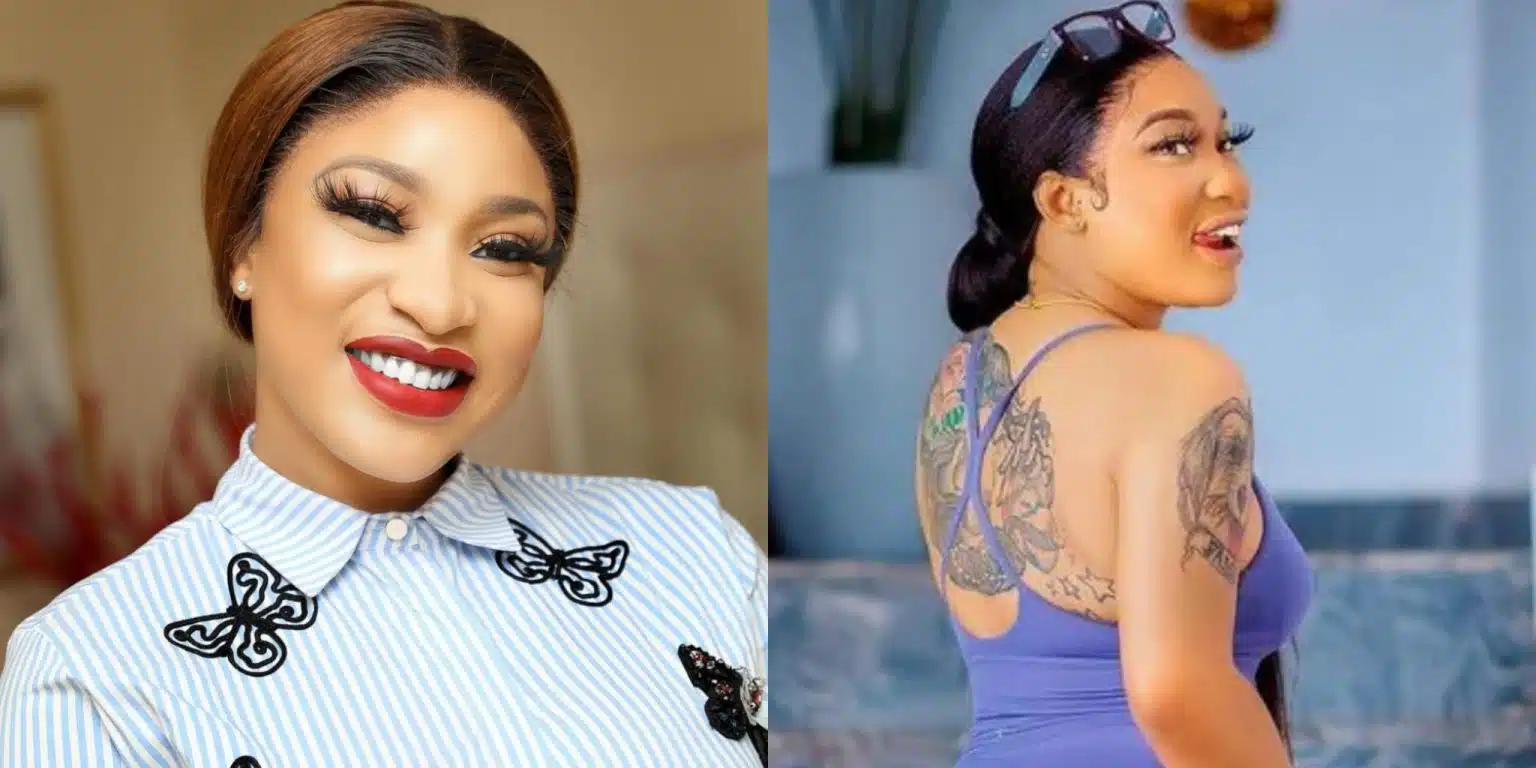
Nollywood icon Tonto Dikeh has sparked a fresh conversation around the intersection of modern lifestyle and traditional religious expectations by declaring that she will not be removing her extensive collection of tattoos. Despite a public and passionate recommitment to her Christian faith, the actress turned politician has made it clear that the ink on her skin is a permanent fixture that does not conflict with her spiritual standing.
This revelation came during a candid digital exchange with her followers, where many have been monitoring her recent shift toward more overtly religious content. Dikeh has recently become a vocal advocate for her faith, frequently sharing videos of her intense prayer sessions and deep spiritual reflections. This visible transformation prompted a curious fan to ask if her new “born-again” status would necessitate the removal of her tattoos.
In her response, Dikeh displayed a characteristic mix of practicality and theological confidence. She admitted that while a younger version of herself might have considered a clean slate, her current priority is the preservation of her physical health and skin integrity. She bluntly stated that she has no intention of undergoing painful and potentially damaging laser procedures simply to satisfy an external perception of what a Christian should look like.
The actress emphasized that her relationship with the divine is internal and personal, asserting that “Jesus doesn’t care” about the ink on her body. By taking this stance, Dikeh is challenging long-standing stereotypes within the Nigerian religious community, where body art is often viewed through a lens of moral judgment. Her perspective suggests a theology of grace that prioritizes the state of the heart over the appearance of the skin.
Beyond the aesthetics of her past, the mother of one is also implementing a rigorous “spiritual audit” of her professional life as she enters 2026. She recently announced a significant shift in her business philosophy, stating that she will be far more selective about the brands and personalities she associates with moving forward. This move appears to be a direct extension of her renewed faith and a desire for greater personal alignment.
Dikeh revealed that she will no longer lend her platform or influence to any entity that shows hostility or a lack of respect toward her spiritual values or her religious leaders. For the actress, respect has become a non-negotiable currency in her professional dealings. She made it clear that her brand is no longer just about entertainment, but about protecting the integrity of her work and her beliefs.
This new boundary-setting is a notable departure from the often chaotic world of celebrity endorsements. Dikeh’s declaration serves as a warning to potential collaborators that she is no longer interested in “business as usual” if it involves compromising her dignity or her faith. She expressed a firm resolve to avoid projects that do not value her contributions or fail to provide a respectful working environment.
The actress’s journey has always been one of public evolution, often played out under the intense scrutiny of social media. Her transition from a controversial “bad girl” of cinema to a devoted Christian and political figure has been met with both praise and skepticism. However, her latest comments on tattoos suggest she is comfortable living in the gray areas of that transformation, refusing to conform to a rigid, “cookie-cutter” version of a convert.
For Dikeh, the tattoos serve as a map of her past experiences, and she seems to view them with a sense of peace rather than regret. By choosing to keep them, she is essentially saying that her history and her future can coexist without the need for a cosmetic erasure. This message of self-acceptance has resonated with many of her fans who struggle with the pressure to be “perfect” after finding faith.
As the year progresses, Dikeh’s focus appears to be on building a legacy that reflects her internal growth. Whether she is speaking in tongues in a viral video or negotiating a high-stakes brand deal, she is positioning herself as a woman who is “stuck” with her past but fully in control of her future. The ink remains, but the woman beneath it has clearly found a new direction.
Her refusal to undergo laser surgery also highlights a growing awareness of the risks associated with certain cosmetic procedures. Dikeh’s mention of not wanting to “spoil her good skin” reflects a pragmatic self-love that many find refreshing in an industry often obsessed with surgical perfection. She is choosing the health of her largest organ over the dictates of religious traditionalism.
Ultimately, Tonto Dikeh’s stance is a bold statement on the modernization of faith in Nigeria. She is navigating the complexities of being a public figure in a deeply religious society while asserting her right to define her own spiritual journey. In her world, the gospel and the tattoo needle are no longer at war; they are simply different parts of a singular, evolving story.

