
World News
Stadium Swearing-In Set for Doumbouya After Landslide Election Win
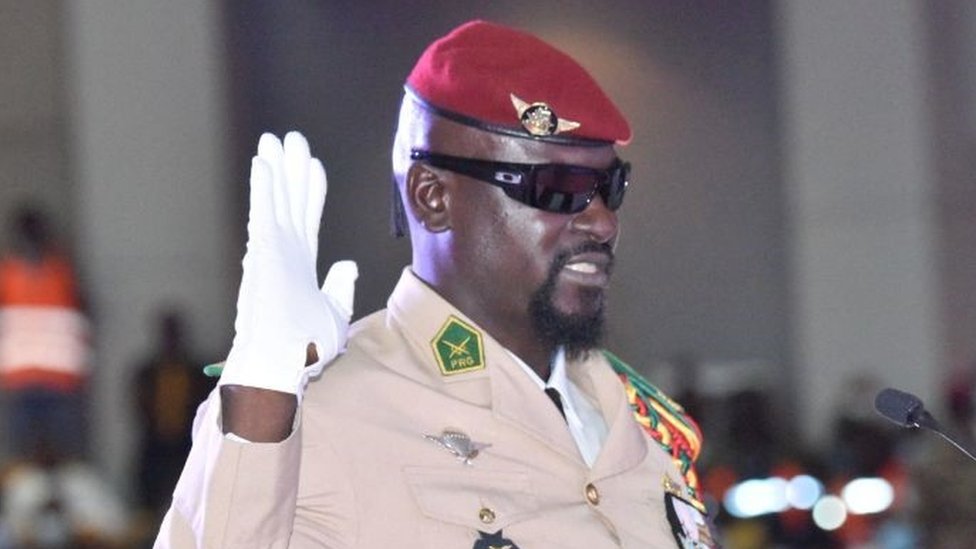
Guinea is preparing for a pivotal transition from military to “civilian” rule as General Mamady Doumbouya prepares to take the oath of office as President on January 17, 2026. The announcement, made by the presidency via its official Facebook page on Tuesday, confirms that the inauguration will be held at the General Lansana Conté Stadium on the outskirts of Conakry. This ceremony marks the formalization of Doumbouya’s hold on power following a presidential election that has drawn intense international scrutiny and domestic debate.
The road to this inauguration was paved by a Supreme Court ruling on Sunday, which ratified the official results of last month’s polls. The court declared Doumbouya the winner with an overwhelming 86.7 percent of the total votes cast. While the figure suggests a massive mandate, the victory has been shadowed by the absence of major opposition figures, many of whom were legally barred from the ballot or chose to boycott the process, citing a lack of transparency and a “predetermined” outcome.
Doumbouya’s victory represents a significant reversal of his initial promises. After leading the September 2021 coup that ousted the country’s first democratically elected president, Alpha Condé, the military leader had famously pledged that neither he nor any member of the transition government would seek elected office. However, a series of legal maneuvers, culminating in the September 2025 constitutional referendum, dismantled those restrictions, allowing the junta leader to trade his uniform for the presidential sash.
The new constitution, which received approval amidst widespread protest, significantly altered Guinea’s political architecture. Presidential terms have been extended from five to seven years, and the document paved the legal path for junta members to contest the very elections they organized. Critics argue that these changes have effectively institutionalized military influence under a veneer of democracy, particularly as civic spaces remain tightly controlled and political protests remain under a blanket ban.
Throughout the campaign period and the subsequent counting of votes, Doumbouya has maintained a remarkably low profile. He made only one public appearance during the weeks leading up to the election and has addressed the nation only once since his victory—via a pre-recorded televised broadcast. This “silent” approach has contrasted sharply with the aggressive crackdown on opposition voices and independent media organizations that has characterized his transition period.
For the people of Guinea, the January 17 inauguration is viewed with a mixture of hope for stability and fear of prolonged authoritarianism. While supporters point to Doumbouya’s efforts to reform the mining sector and modernize infrastructure, human rights groups highlight the growing list of exiled or imprisoned dissidents. As the General Lansana Conté Stadium prepares for the arrival of foreign dignitaries and local loyalists, the shadow of the 2021 coup still looms large over the capital.
The transition to a seven-year term marks a new chapter for the West African nation, which has struggled with cycles of political upheaval since gaining independence. International observers from the African Union and ECOWAS are expected to attend the ceremony, though many remain wary of the precedent set by Guinea’s “civilianization” of a military regime. As the city of Conakry prepares for the festivities, the question remains whether this new administration will loosen its grip on civil liberties or continue the restrictive path of the past four years.