
NEWS
Sanwo-Olu Orders Demolition of Fire-Ravaged GNI Building to Avert Disaster
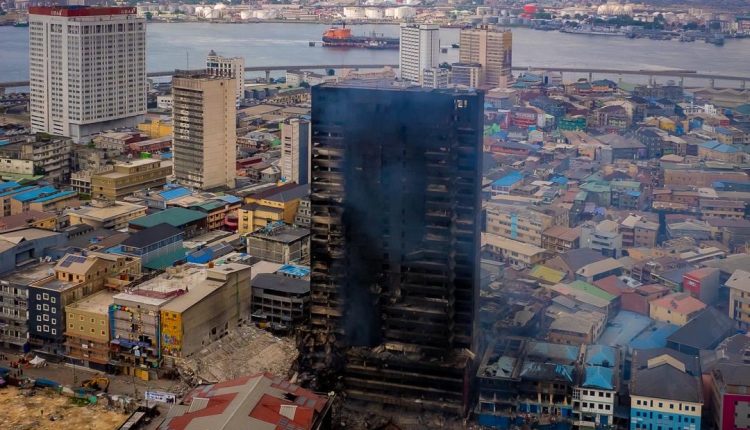
The Lagos State Government has moved to prevent a secondary disaster on Lagos Island by constituting a Technical Recovery and Demolition Committee to oversee the removal of the iconic Great Nigeria Insurance (GNI) building. This decision, finalized following a second inspection by Governor Babajide Sanwo-Olu on January 2, 2026, marks the beginning of the end for the 25-storey landmark, which was structurally crippled by a devastating Christmas Eve inferno.
Headed by the Commissioner for Special Duties and Intergovernmental Relations, Gbenga Oyerinde, the committee is tasked with executing a “controlled and surgical” demolition of the high-rise and several compromised surrounding structures. Governor Sanwo-Olu emphasized that while the decision to tear down such a prominent edifice is difficult, the safety of Lagosians remains the administration’s “foremost priority.”
The Lagos State Fire and Rescue Service has described the current environment at 47/57 Martins Street as “extremely sensitive and volatile.” Agency Controller General Margaret Adeseye warned that the 25-storey structure is currently in a state of “unstable equilibrium.” Preliminary assessments suggest that the massive volume of debris accumulated inside the building may ironically be providing unintended structural support, meaning any uncoordinated removal could trigger an immediate, catastrophic collapse.
Ground operations remain complex, as emergency responders continue to detect intermittent “pockets of fire” buried deep beneath the rubble. These flare-ups are being fueled by vast quantities of textiles and clothing materials that were tightly packed into the building, which had been illegally converted into a warehouse. Accessing these subterranean fires requires specialized equipment and a meticulous technical plan to ensure the safety of the personnel on-site.
The human cost of the tragedy has been officially updated to eight fatalities, including five victims who have already been identified by their families. DNA testing is being arranged for the three remaining charred bodies recovered from the ruins. While 13 individuals were successfully rescued alive, search and recovery teams are still carefully combing through sections of the debris deemed safe to ensure that no other victims remain trapped.
Investigation findings released alongside the demolition order have painted a grim picture of systemic safety failures within the GNI House. Officials cited “floor-to-ceiling” storage of combustible goods with zero ventilation, a total lack of functional fire-fighting installations, and the hazardous use of fuel-powered generators inside confined shops. The governor also noted that illegal shops constructed near electrical transformers significantly exacerbated the spread and intensity of the December 24 blaze.
As the demolition committee begins its work, the adjoining Balogun Market remains under a strict lockdown. An information desk has been established at the site to provide updates to distraught traders and families who have been displaced by the incident. Governor Sanwo-Olu has vowed that the site will remain an “active emergency zone” until ground zero is fully accessed and every potential risk to the public is eliminated.

