
Entertainment
Samklef Stirs Afrobeat History Debate with Claims Against Fela Kuti
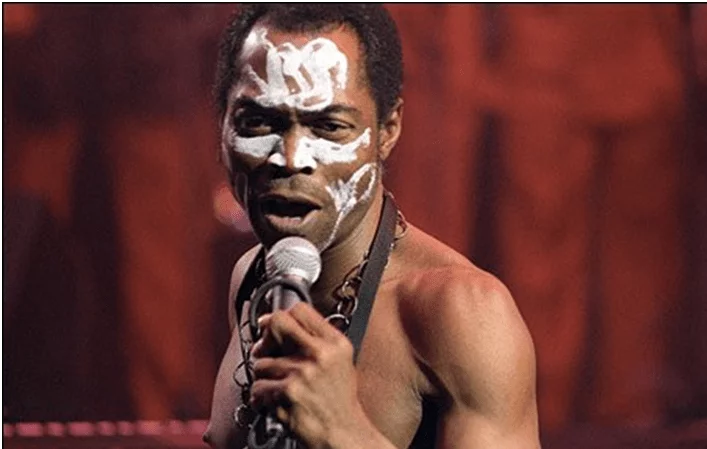
The digital space has been set ablaze by record producer Samuel Oguachuba, widely known as Samklef, who has challenged the long-held belief that Fela Anikulapo-Kuti was the sole architect of Afrobeat. In a series of provocative posts on X, the producer alleged that the legendary Fela “stole” his iconic musical style from the late veteran multi-instrumentalist Orlando Julius Ekemode. This claim comes at a time of heightened tension within the music industry, as the “Afrobeat vs. Afrobeats” debate continues to pit contemporary stars against the Kuti legacy.
Samklef’s argument centers on the early 1960s, a period when Orlando Julius was already experimenting with a fusion of highlife, jazz, and American R&B. Sharing a photograph of Orlando, Samklef asserted that the “Super Afro Soul” pioneer was the true founder of the genre. He went as far as claiming that Orlando Julius was the one who taught Fela how to play the saxophone, providing him with the musical foundation that would later define his global career.
The producer pointed to Nigeria’s historically poor record-keeping as the reason why Fela has enjoyed a monopoly on the title of Afrobeat pioneer. “The problem with Nigeria is generally, we lack proper documentation,” Samklef wrote, promising to “teach” his followers the true history of the sound. His comments suggest that Fela was more of a brilliant polisher and popularizer of a pre-existing blueprint rather than its lone creator.
While Samklef’s “stolen” narrative is controversial, music historians have long acknowledged the symbiotic relationship between the two legends. Records show that a young Fela Ransome-Kuti was a regular at Orlando Julius’s club sessions in Ibadan during the mid-60s. Julius himself once revealed in interviews that he even provided Fela with several band members to help him get his own group, Koola Lobitos, off the ground.
However, the distinction between “Afro-soul”—the term often applied to Orlando’s work—and “Afrobeat” remains a point of scholarly debate. Most experts agree that while Orlando Julius laid the rhythmic groundwork, it was Fela who infused the sound with its signature political militancy and complex, chanted vocal structures. Fela’s 1969 trip to the United States, where he was influenced by the Black Power movement, is widely seen as the moment the sound evolved into the revolutionary weapon known today.
The timing of Samklef’s outburst is noteworthy, as it coincides with a bitter feud between his former collaborator, Wizkid, and the Kuti family. By attacking Fela’s legacy, Samklef appears to be taking a side in the ongoing industry civil war, attempting to deconstruct the “untouchable” status of the Kuti name. For many fans, the producer’s claims are a bridge too far, viewed as a disrespectful attempt to rewrite history for social media engagement.
Supporters of Samklef’s view argue that it is time for other pioneers like Orlando Julius and the late drummer Tony Allen to receive their full due. They contend that the “one-man myth” surrounding Fela overlooks the collective effort of a generation of musicians who were all experimenting with similar fusions in the post-independence era. To these observers, acknowledging Orlando Julius’s influence does not take away from Fela’s genius but provides a more accurate picture of West African musical evolution.
As the debate rages on, it is clear that the origins of Afrobeat remain a deeply emotional subject for Nigerians. Whether viewed as an act of historical “correction” or a calculated provocation, Samklef has succeeded in forcing a conversation about the roots of Africa’s most famous sound. For the newer generation of fans, the controversy serves as a reminder that the music they enjoy today stands on the shoulders of multiple giants, some of whom remain in the shadows of history.

