
World News
Prosecutors Demand 10-Year Sentence for Ousted South Korean Leader
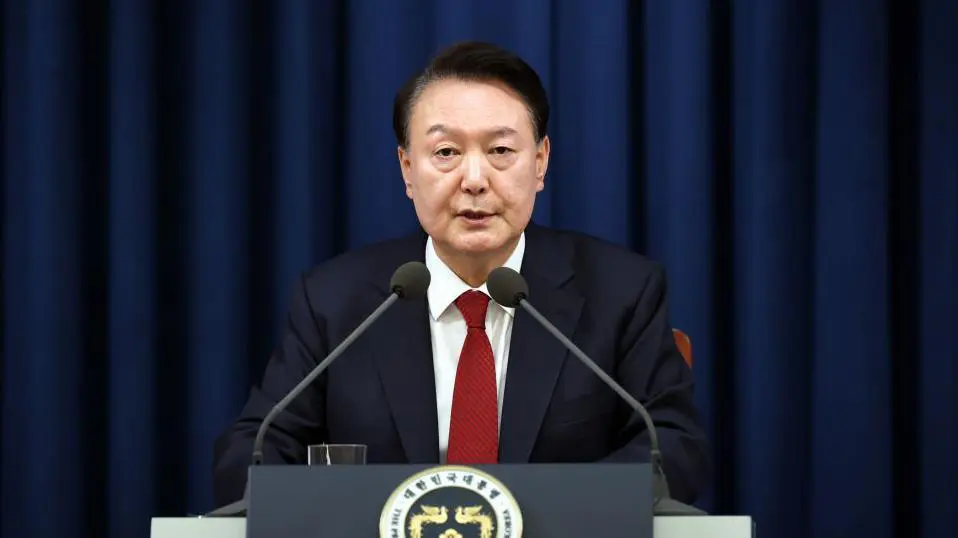
South Korean special prosecutors have formally requested a 10-year prison sentence for former President Yoon Suk Yeol, marking a historic legal reckoning for the leader whose failed martial law declaration plunged the nation into a constitutional crisis. During a final hearing at the Seoul Central District Court on Friday, December 26, 2025, the independent counsel team led by Cho Eun-suk argued that the former president’s actions constituted a grave betrayal of public trust and a systematic attempt to undermine the rule of law.
The sentencing request specifically addresses charges related to Yoon’s alleged obstruction of justice and abuse of authority. Prosecutors broke down the 10-year demand into three components: five years for obstructing official duties, three years for abuse of power, and two years for falsifying official documents. A central pillar of the case is Yoon’s dramatic resistance to arrest in January, during which he allegedly fortified his residence and utilized presidential security personnel as “human shields” to block investigators from executing a lawful warrant.
Beyond the standoff at his residence, the prosecution accused Yoon of “privatizing state institutions” to cover up the illegality of his aborted martial law bid. Evidence presented in court suggested that Yoon excluded key cabinet members from mandatory meetings during the crisis and later ordered the destruction of encrypted phone records and other secure communications. Prosecutors noted that despite the weight of the evidence, the former leader has shown “no remorse” for actions that briefly suspended civilian governance for the first time in over four decades.
Yoon Suk Yeol has consistently denied any criminal intent, maintaining that his emergency decree was a necessary response to “pro-North Korea” and traitorous activities that threatened national stability. His legal team argued that the arrest warrants issued against him were invalid and characterized the prosecution’s efforts as politically motivated. However, the special counsel countered that no leader is above the constitution, stating that harsh punishment is required to prevent such a “terrorist act against democracy” from ever recurring in South Korea’s history.
The downfall of the 65-year-old former prosecutor-turned-president has been swift and unprecedented. Following his botched martial law move on December 3, 2024, Yoon was impeached by the National Assembly and formally removed from office by a unanimous Constitutional Court ruling in April 2025. He has remained in custody since his re-arrest in July, making him the first sitting president in the nation’s history to be arrested and indicted.
While today’s sentencing request focuses on obstruction and abuse of power, it is only the first of seven criminal cases Yoon currently faces. The most serious among them is a separate insurrection trial, where a conviction could theoretically carry the death penalty under South Korean law. Legal experts suggest that the verdict in this first trial will serve as a critical benchmark for the subsequent proceedings, signaling how the judiciary intends to handle the broader charges of rebellion and treason.
The Seoul Central District Court is expected to deliver its final verdict on January 16, 2026. As the proceedings conclude, the nation remains deeply divided, with the trial serving as a stark reminder of the fragile balance between executive power and democratic accountability. For the prosecutors, the 10-year demand is not just a sentence for one man, but a “stern responsibility” to safeguard the future of the Republic of Korea’s constitutional order.