
Politics
Political Target: Wike Claims Title of Nigeria’s Second Most Abused Leader
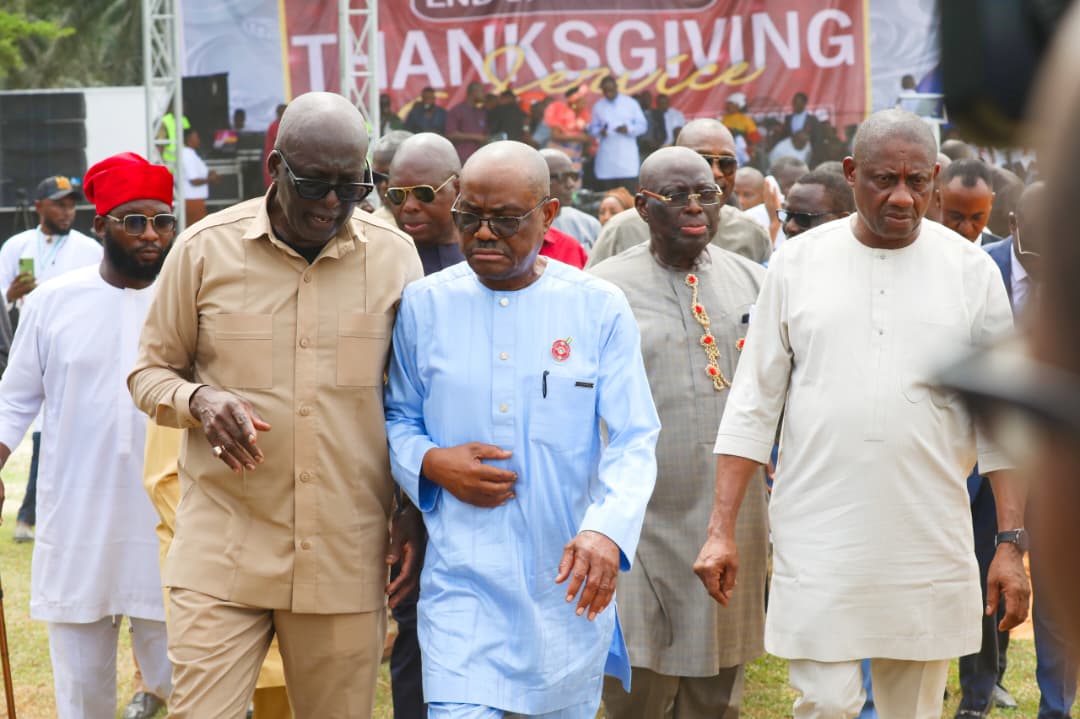
In the heart of Rivers State, where the political temperature rarely drops, the Minister of the Federal Capital Territory, Nyesom Wike, has made a striking assessment of his standing in the national psyche. Speaking during a high-profile gathering in Ochigba, Ahoada East Local Government Area, the former governor declared himself the most criticized and insulted politician in Nigeria today, trailing only behind President Bola Tinubu in the volume of public backlash he receives.
The venue for this candid reflection was an end-of-year thanksgiving service and stakeholders’ meeting of the Peoples Democratic Party (PDP), hosted by Chibudom Nwuche, a former Deputy Speaker of the House of Representatives. Surrounded by loyalists and political heavyweights, Wike used the platform to dissect the reasons behind his controversial reputation, framing the constant “abuse” he receives not as a sign of failure, but as a byproduct of his uncompromising political philosophy.
According to Wike, the vitriol directed his way stems from a singular, rigid principle: the sanctity of political agreements. He argued that his detractors are often uncomfortable with his insistence on following through with pacts made behind closed doors. For the Minister, a deal is a moral and political obligation that must be honored to ensure his followers are not left in the lurch, a stance he believes triggers those who would rather play a more fluid or deceptive game.
“After Tinubu, the next most abused politician today is me,” Wike told the crowd, sparking a wave of murmurs and nods from the gathered PDP stakeholders. He challenged his critics by stating that if a party is not prepared to implement the terms of a consensus, they should never have entered the negotiation in the first place. This “agreement is agreement” mantra has become the hallmark of Wike’s brand, often putting him at odds with shifting political tides and rival factions.
The Minister’s remarks also served as a firm reaffirmation of his current political trajectory and his alliance with the Presidency. He reminded the audience that their collective decision to support President Bola Tinubu was not a whim but a calculated, agreed-upon position. Despite the friction this has caused within the broader PDP structure, Wike signaled that there would be no retreat from this path, reinforcing his commitment to the “renewed hope” agenda.
Wike’s self-identification as a lightning rod for criticism comes at a time of heightened tension in Rivers State, where his influence continues to clash with the current state administration. By positioning himself as a victim of abuse alongside the President, he effectively linked his political survival to the success of the federal government, suggesting that the same forces attacking the Commander-in-Chief are the ones targeting his own leadership style.
The gathering in Ochigba was more than a religious thanksgiving; it was a display of regional strength. In a local government area known for its strategic importance, Wike’s presence and his vocal defense of his methods were intended to reassure his grassroots base that he remains unbowed by the national discourse. He emphasized that the welfare and inclusion of his followers depend on his ability to hold power-players to their word, regardless of the public outcry.
The discourse around “agreements” is particularly sensitive in the Nigerian political landscape, where shifting loyalties are common. Wike’s insistence on “implementing what we agreed on” is a direct swipe at those he perceives as betraying the pacts that brought them to power. By leaning into his reputation as a difficult or “abused” figure, he is attempting to rebrand his stubbornness as a form of integrity—a shield for his supporters against the volatility of the political elite.
As the meeting concluded, the Minister’s message was clear: he views the insults as a badge of honor. To him, the abuse is proof that he is standing in the way of those who wish to bypass established political orders. He left the Ahoada East stakeholders with the impression that as long as he remains a key figure in the Tinubu administration, he will continue to absorb the shocks of public criticism in exchange for maintaining his grip on the political machinery of the state.
This latest declaration adds another layer to the complex persona of Nyesom Wike. Whether he is viewed as a champion of political loyalty or a disruptive force, he clearly relishes his role in the spotlight. By claiming the title of the second most abused politician, he has once again ensured that even when he is being criticized, he remains at the very center of the national conversation, mirroring the prominence of the presidency itself.


