
NEWS
Nigeria Defends US Airstrikes as Authorized Counter-Terror Operation
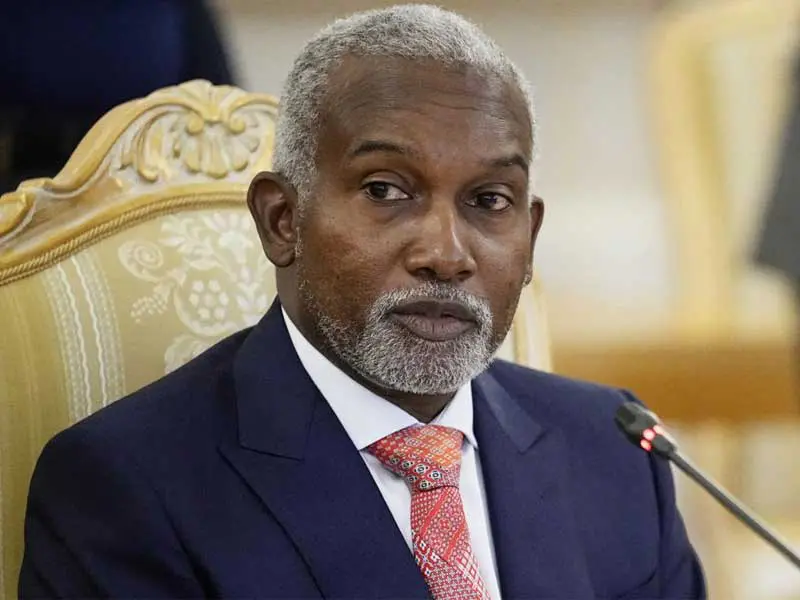
Nigeria’s Minister of Foreign Affairs, Yusuf Tuggar, has dismissed concerns over national sovereignty following a series of lethal American airstrikes targeting insurgent strongholds in the country’s North-West region. Speaking during a high-profile interview with CNN on Friday, Tuggar clarified that the military action was not a unilateral overreach by a foreign power but a carefully coordinated joint mission sanctioned by the presidency.
The Minister’s remarks come in the wake of intensifying public debate regarding the presence of foreign military assets on Nigerian soil. Tuggar was emphatic in his stance, asserting that the operations did not infringe upon Nigeria’s territorial integrity. He maintained that the strikes were a direct result of a strategic partnership aimed at neutralizing a common threat.
According to the Minister, the mission was fully authorized at the highest level of the Nigerian state. President Bola Tinubu, acting in his capacity as Commander-in-Chief, reportedly gave the green light for the American intervention after high-level security consultations. This authorization, Tuggar argued, ensures that the strikes remain within the legal framework of international cooperation and national defense.
The Minister stressed that the collaboration was born out of a shared necessity to combat the rising tide of terrorism that has plagued the North-West. He rejected any suggestion that Nigeria was acting under external duress or that the operation was influenced by foreign religious agendas. The primary driver, he noted, was the urgent need to protect Nigerian lives and stabilize a region that has seen significant violence.
Tuggar’s defense of the operation highlights the Federal Government’s reliance on advanced foreign surveillance and precision strike capabilities to augment domestic security efforts. He insisted that the government remains firmly in the driver’s seat regarding all security decisions made within its borders. The collaboration, he suggested, is a tactical tool rather than a surrender of control.
The diplomatic clarification follows a series of bold statements from Washington. U.S. President Donald Trump had earlier confirmed that American forces conducted what he described as “deadly strikes” against Islamic State militants operating in the northwestern reaches of Nigeria. The American leader’s rhetoric was notably aggressive, linking the strikes to the protection of specific communities.
In a post shared on his Truth Social platform, the U.S. President lauded the “Department of War” for executing what he characterized as “perfect strikes.” He also issued a stern warning, promising further military action if militants continued to target Christian populations in the region. This framing by the White House has added a layer of complexity to the diplomatic narrative surrounding the mission.
Despite the potentially polarizing nature of the U.S. President’s comments, Tuggar focused on the operational synergy between the two nations. He sought to decouple the military necessity of the strikes from the political rhetoric emerging from Washington. For the Nigerian government, the focus remains on the elimination of terrorist cells that have used the rugged terrain of the North-West to launch attacks.
The strikes represent a significant escalation in U.S. military involvement in West African counter-terrorism efforts. While the U.S. has long provided intelligence and training to the Nigerian military, the direct application of kinetic force marks a shift in the engagement model. This shift has raised eyebrows among regional analysts who worry about the long-term implications of foreign air power in domestic conflicts.
However, the Ministry of Foreign Affairs remains resolute that these actions are a legitimate exercise of collective security. Tuggar’s intervention appears aimed at reassuring both the domestic audience and the international community that Nigeria’s sovereignty remains intact. He argued that a sovereign nation has the right to invite allies to assist in matters of national survival.
The controversy also touches on the sensitive issue of how these strikes are perceived on the ground. By emphasizing that the strikes were a “collaborative effort,” the government is attempting to frame the U.S. as a supporting partner rather than an independent actor. This distinction is crucial for maintaining public support in a country that is historically wary of foreign military footprints.
As the smoke clears from the North-West, the focus is shifting toward the effectiveness of the strikes. While the U.S. administration has hailed the results as a success, the Nigerian government is tasked with managing the fallout and ensuring that the operations do not lead to unintended civilian casualties. Tuggar’s assurance of “accuracy and clarity” in these missions is intended to build confidence in the joint command structure.
The geopolitical weight of this partnership cannot be understated. By aligning closely with U.S. military objectives, Nigeria is positioning itself as a central pillar in the global fight against extremist groups like the Islamic State. However, the government must balance this alliance with its constitutional obligation to guard its borders against any form of perceived “re-colonization” through military means.
For now, the official line from Abuja is one of total confidence. The Minister’s interview serves as a formal diplomatic seal on the operation, moving the conversation away from legalities and back toward the tactical goal of eradicating insurgency. The Federal Government continues to maintain that its grip on national security is as firm as ever, even when the triggers are pulled from thousands of feet in the air by foreign jets.


