
NEWS
Military Seizes Bobi Wine Amid Post-Election Turmoil
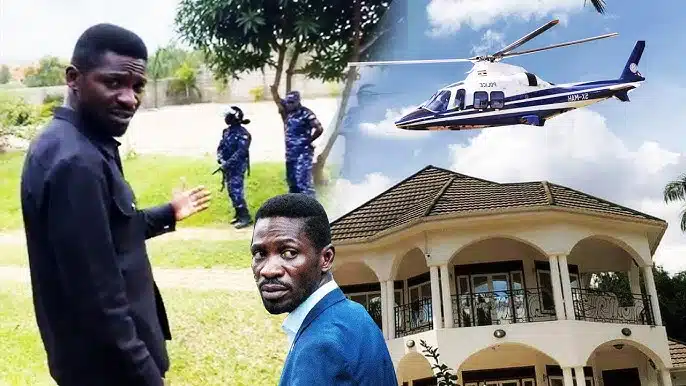
Uganda has been thrust into a profound political crisis as military forces reportedly stormed the residence of opposition leader Bobi Wine, forcibly removing him via helicopter to an undisclosed location. The dramatic operation, confirmed by his National Unity Platform (NUP) party late Friday, follows a presidential election defined by allegations of widespread fraud, state-led repression, and a complete nationwide internet blackout.
Bobi Wine, the former pop star whose legal name is Robert Kyagulanyi, had spent the hours following Thursday’s vote under a de facto house arrest, with his compound in Kampala surrounded by heavy security. According to party officials, the situation escalated when a military helicopter landed within his private property. Soldiers allegedly assaulted his personal security detail before whisking the 43-year-old “Ghetto President” away.
While the Ugandan army has officially termed reports of an “abduction” as “absurd” and “baseless,” the lack of communication from the opposition leader has fueled international concern. Military spokesperson Chris Magezi maintained on Saturday that Wine was not under arrest, yet journalists on the ground noted that access to his residence remains strictly controlled by a significant police and military presence.
The seizure of the country’s most prominent opposition figure coincides with the announcement of preliminary election results. The Electoral Commission reported that veteran President Yoweri Museveni, who has held power since 1986, has secured nearly 74% of the vote. Bobi Wine trails with approximately 23%, a figure his supporters have vehemently rejected as a manufactured outcome designed to extend Museveni’s four-decade rule.
This latest move by the state follows reports of extreme violence in other regions. In the Butambala district, NUP lawmaker Muwanga Kivumbi accused security forces of a “massacre” at his home. He alleged that troops stormed his property and opened fire on campaign agents who were hiding in a garage, killing ten people. Kivumbi described a chilling scene where the military allegedly removed bodies to scrub the site of evidence, leaving only pools of blood behind.
Police officials provided a contrasting narrative, claiming that their operatives were responding to an attempted attack by “NUP goons” who intended to burn down a vote tallying center. While the police confirmed that several individuals were “put out of action,” they characterized the incident as a necessary security measure to maintain order.
The atmosphere in Kampala remains suffocatingly tense. The internet shutdown, which has lasted for several days, has hindered the ability of international observers and local journalists to verify the scale of the crackdown. Human rights organizations had warned prior to the polls that the environment was marked by “widespread repression,” noting that the state has increasingly relied on the military to stifle dissent.
As the nation awaits the final official results on Saturday, the disappearance of Bobi Wine has left a vacuum of leadership for the opposition. Museveni, now 81, appears poised for a seventh term, but the heavy-handed tactics used to secure it have cast a long shadow over the legitimacy of the process. For many Ugandans, the image of a helicopter lifting a political rival from his home serves as a stark reminder of the narrowing space for democracy in the East African nation.