
NEWS
Legacy of Neglect: APC’s Ajiboye Traces Economic Woes to Past Failures
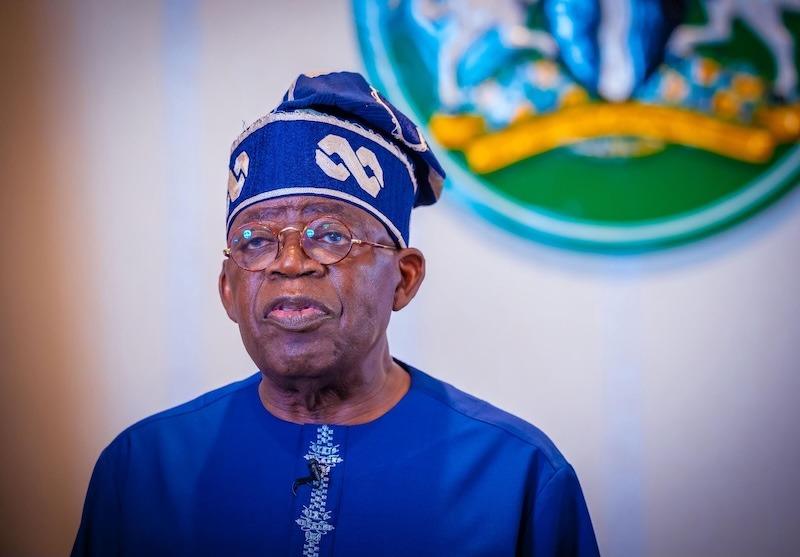
The persistent debate over Nigeria’s economic trajectory took a sharp, defensive turn on Tuesday as Biodun Ajiboye, a prominent chieftain of the All Progressives Congress (APC), stepped forward to insulate President Bola Tinubu from growing public frustration. During a high-stakes appearance on Arise Television, Ajiboye delivered a blistering critique of past administrations, characterizing the current national hardship not as a failure of the present government, but as the inevitable “aftermath” of decades of systemic rot and fiscal irresponsibility.
Ajiboye’s central argument rested on the premise that a nation of Nigeria’s stature does not disintegrate in a vacuum. He urged Nigerians to look beyond the immediate pain of inflation and currency devaluation to understand the “history of the collapse” he claims was handed to Tinubu in May 2023. By his estimation, the scale of the inherited crisis—defined by indiscriminate money printing and the mortgaging of future oil revenues—left the current administration with little room for maneuver.
The APC chieftain was particularly pointed regarding the previous administration’s monetary policies, questioning how the nation could have expected stability after the printing of over ₦30 trillion through “Ways and Means” advances. He painted a grim picture of a country that had essentially sold its future while the oil was still in the ground, leaving a hollowed-out economy for the new leadership to manage.
Defending the controversial reforms that have characterized the Tinubu era, Ajiboye asserted that the removal of fuel subsidies and the floating of the Naira were not elective choices but emergency surgeries. He argued that without these interventions, Nigeria was on a trajectory toward a “Sri Lanka-type” total collapse, characterized by civil unrest and absolute economic paralysis. To expect a complete reversal of this damage in under three years, he suggested, is to ignore the depth of the “mess” created over several decades.
Ajiboye did not reserve his fire for past policies alone; he turned his gaze toward current critics, labeling opposition figures as hypocritical. He alleged that many of those loudest in their condemnation today were “prominent players” in the very administrations that fostered the current instability. He challenged the public to examine the records of these critics, suggesting that their current activism is a mere smokescreen to hide their past roles in the national decline.
The conversation also touched on the President’s frequent international travels, a point of significant public contention during the 2026 fiscal year. Ajiboye, who recently accompanied the President to Brazil, dismissed the notion that these trips are frivolous. He argued that in a globalized economy, a leader cannot drive recovery from a stationary position. He pointed to ongoing negotiations in Abu Dhabi as evidence that these diplomatic forays are actively yielding the foreign investment inflows necessary to stabilize the Naira.
According to Ajiboye, the current administration is in a “clean-up phase” that requires patience rather than “miracle-seeking.” He maintained that the foundation being laid through international alliances and painful fiscal adjustments is the only sustainable way to rebuild a country that has been “beautiful but battered.” His remarks underscore a growing narrative within the ruling party that the “Tinubu Miracle” is a long-term project being hampered by the ghosts of Nigeria’s recent political history.
As the 2026 economic outlook remains a subject of intense scrutiny, Ajiboye’s intervention serves as a reminder of the deep-seated polarization regarding who bears the ultimate responsibility for the “Nigerian collapse.” For the APC stalwart, the path forward is clear: acknowledge the historical rot, support the “unavoidable” reforms, and allow the administration the time required to turn a systemic failure into a strategic recovery.


