
Politics
IPAC to Wike: No Mandate for Your ‘Rainbow Coalition’ for Tinubu
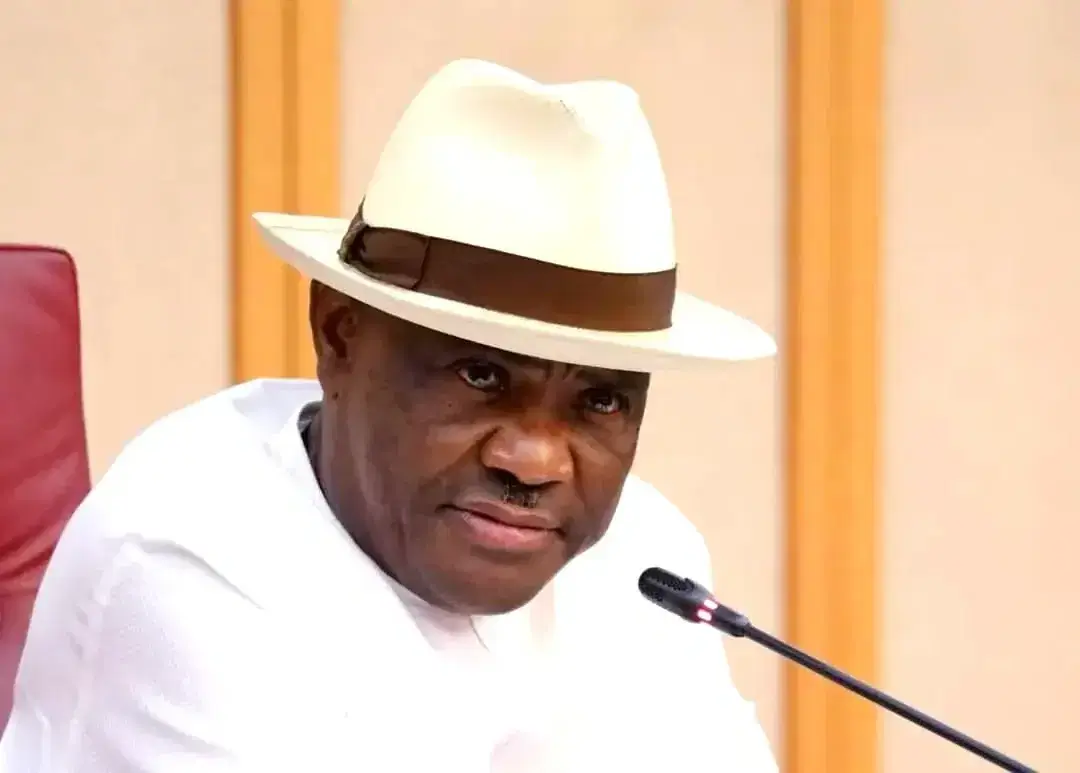
The Inter-Party Advisory Council (IPAC) has issued a stinging rebuke to the Minister of the Federal Capital Territory (FCT), Nyesom Wike, dismissing his claims of a “rainbow coalition” aimed at securing President Bola Tinubu’s re-election in 2027. In a move that highlights the sharpening of political knives in the 2026 pre-election season, the umbrella body of all registered political parties in Nigeria characterized Wike’s assertions as “unfounded” and purely a product of his “imagination.”
The friction erupted following a series of public statements by the FCT Minister, who suggested that political parties across the country were gravitating toward his leadership to form a united front for the incumbent President. However, IPAC, through its National Publicity Secretary, Egbeola Martins, made it clear on Tuesday, January 14, 2026, that the former Rivers State Governor lacks the authority to negotiate or announce political alliances on behalf of the council. IPAC insisted that no mandate was ever granted to Wike to speak for any registered political party or to determine their electoral choices for the upcoming general elections.
Martins’ statement served as a firm reminder of the constitutional independence of political parties. He noted that decisions regarding coalitions, mergers, or endorsements are the exclusive prerogative of the internal democratic organs of each party, not the dictated preference of a single influential individual. The council’s language was particularly pointed, warning against what it described as a “hijack” of the collective will of political institutions for personal political gain.
The fallout between IPAC and Wike also touched on the high-octane political drama unfolding in Rivers State. In a revealing turn, IPAC disclosed that rather than lining up behind a “rainbow coalition” for the 2027 presidency, several political parties are actually considering an “unconditional solidarity support” for the embattled Rivers State Governor, Siminalayi Fubara. The council suggested that some parties might even go as far as not fielding governorship candidates in the state to ensure peace and stability—a direct counter-narrative to Wike’s ongoing struggle for influence in his home state.
Wike’s bold claims have increasingly alienated former allies, including Oyo State Governor Seyi Makinde, who recently asserted that Wike cannot dictate the political choices of others. The FCT Minister’s rhetoric, which has often included threats to “start politics in January 2026,” appears to have catalyzed a pushback from institutional bodies like IPAC that view his “one-man-army” approach as a threat to multi-party democracy. By publicly disowning his leadership, IPAC has effectively stripped the “rainbow coalition” of its perceived legitimacy before it could even launch.
For the Tinubu administration, this public spat presents a delicate diplomatic challenge. While Wike remains a key cabinet member and a formidable political strategist, the total rejection of his coalition narrative by the country’s central advisory council for political parties indicates that the path to a 2027 consensus will be far more fragmented than the Minister predicts. As 2026 begins, the battle lines are being drawn not just between parties, but between independent institutions and the powerful individuals who seek to command them.