
NEWS
Dele Alake Secures Second Term as Africa Minerals Strategy Group Chair
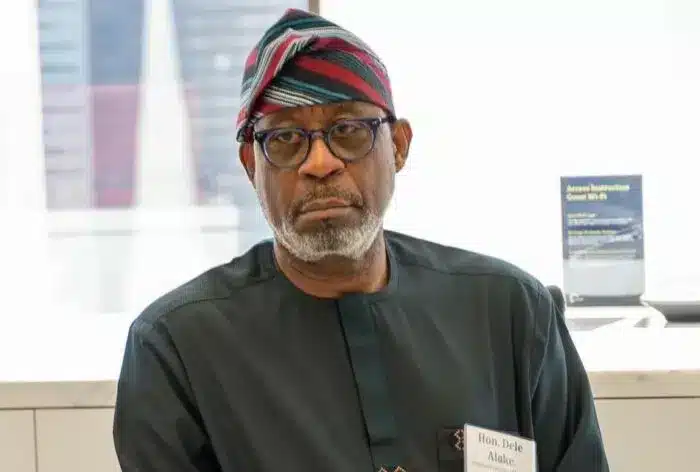
In a significant show of continental confidence, Nigeria’s Minister of Solid Minerals Development, Dele Alake, has been re-elected as the Chairman of the Africa Minerals Strategy Group. The election, which saw Alake returned unopposed, took place during the 2026 Annual General Meeting of the body held on the sidelines of the Future Minerals Forum in Riyadh, Saudi Arabia. This renewal of his mandate marks a pivotal moment for Africa’s mining sector as it seeks to transition from mere raw material extraction to a sophisticated, value-driven industrial powerhouse.
Alake originally made history in 2024 as the pioneer chairman of the group, which was established to unify African voices in the global mining landscape. The AMSG serves as a strategic forum for ministers across the continent to coordinate policies and enhance their collective bargaining power. By speaking with one voice, the group aims to ensure that Africa’s vast mineral wealth—ranging from lithium and cobalt to gold and copper—is no longer exported in its crude form but processed locally to create jobs and wealth for its citizens.
The Riyadh meeting was more than just a leadership shuffle; it represented a structural evolution for the organization. To bolster its institutional capacity, member states approved a new executive framework designed to ensure that every corner of the continent has a seat at the table. While Alake continues his leadership representing West Africa, the Democratic Republic of Congo has taken the Vice-Chairmanship for Central Africa, with Uganda, Mauritania, and South Africa filling other key executive roles to represent the East, North, and Southern regions respectively.
One of the most strategic decisions made during the summit was the institutionalization of leadership positions. The ministers agreed that these roles will henceforth belong to the member countries rather than the specific individuals holding office. This ensures that even if a cabinet reshuffle occurs in a home country, the new minister will seamlessly step into the continental role, maintaining the stability and continuity necessary for long-term project planning and international negotiations.
In his acceptance speech, Alake was quick to move beyond the formalities of the election, pivoting immediately to the practical challenges facing the continent. He emphasized that the group’s credibility on the global stage depends on transparency and financial independence. To this end, he urged member states to commit to a minimum financial contribution, arguing that when countries invest their own resources, accountability naturally follows. This move is seen as an effort to reduce reliance on external donor funding and give the AMSG more autonomy in its decision-making.
The roadmap for the next two years is ambitious. The ministers resolved to establish standing committees focused on the legal, sustainable, and financial aspects of responsible mining. There is also a bold plan in motion to host a massive, global-scale minerals conference on African soil. This proposed event is intended to rival the scale of the Future Minerals Forum, positioning Africa not just as a source of resources, but as a primary destination for global investment and high-level industrial dialogue.
Alake’s vision for the continent is heavily centered on infrastructure, which he describes as the “missing link” in Africa’s mineral transformation. During a leadership roundtable focused on the Copper Belt, he argued that mineral production alone is insufficient to trigger economic transformation. He pointed out that without dedicated transport corridors, mineral wealth remains trapped or is moved at an exorbitant cost. He cited the Lobito Corridor as a gold standard for regional cooperation and called for similar investment in the Lagos–Abidjan and Walvis Bay corridors to link African markets and ports.
The Nigerian minister’s re-election also reflects the growing influence of President Bola Tinubu’s “Solid Minerals” agenda on the international stage. Alake has been a vocal proponent of “beneficiation”—the process of refining minerals within the country of origin. He maintains that the era of shipping out raw ores is coming to an end. By pushing for a coordinated continental approach, Alake hopes to force a shift in the global supply chain that favors African industrialization over foreign processing plants.
As the global demand for “green” minerals surges due to the energy transition, Alake’s second term comes at a critical juncture. The world is looking to Africa for the materials needed for electric vehicles and renewable energy. Under Alake’s leadership, the AMSG is positioning itself to ensure that this new “scramble for Africa” results in a win-win scenario, where investment is welcomed but only on terms that guarantee local development, policy stability, and shared prosperity across the borders.

