
NEWS
Crisis in Rivers: Analyst Warns Tinubu Over Fubara’s Survival
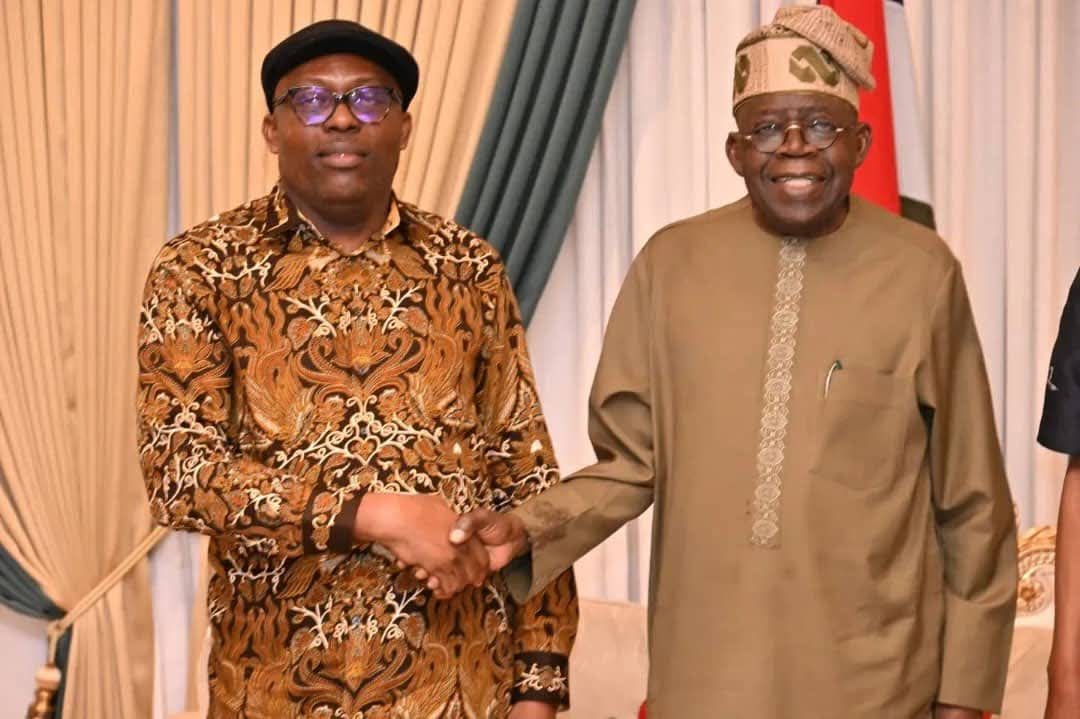
The political turbulence currently shaking the foundations of Rivers State is no longer a localized skirmish but a high-stakes battle for the soul of Nigerian democracy. Political affairs analyst Ibrahim Modibo has sounded a clear alarm, characterizing the renewed impeachment proceedings against Governor Siminalayi Fubara as a dangerous manifestation of power overreach rather than a quest for accountability. Speaking on the broader implications of the crisis, Modibo warned that the outcome of this standoff will serve as a definitive litmus test for President Bola Tinubu’s leadership and the safety of all state executives across the federation.
Modibo’s assessment centers on the friction between Governor Fubara and his predecessor, the Minister of the Federal Capital Territory, Nyesom Wike. The analyst argued that the legislative onslaught led by the Rivers State House of Assembly is not an organic movement but a triggered event orchestrated from the shadows. Using a vivid local proverb, he suggested that when a bird is seen dancing in the middle of the road, it is because a drummer is beating the rhythm from the bush. This metaphor highlights the belief that the legislators’ actions are inseparable from the influence of their political benefactor.
The analyst questioned the legitimacy of the charges leveled against Fubara, describing them as “frivolous” and “comical.” He contended that the seven-point notice of gross misconduct serves as a thin veil for personal grievances and private interests rather than the public good. In his view, the allegations are pedestrian and fail to reflect any genuine governance failure that would justify the removal of a sitting governor. He noted that the intensity of the pressure on Fubara appears designed to punish the Governor for seeking independence rather than for any actual breach of his constitutional oath.
Modibo was particularly critical of the concept of “godfatherism” without boundaries. He argued that while political mentorship is a reality in the Nigerian system, it should never translate into an overbearing or compulsive influence that stunts an elected official’s ability to govern. He pointed out the irony of the situation, noting that those currently exercising overwhelming control were themselves once beneficiaries of a system that allowed them to rise without being trampled upon. To Modibo, a political structure should be a tool for building stability, not a mechanism for creating perpetual trouble.
The analyst highlighted Fubara’s recorded achievements as evidence that the Governor has stayed focused on service delivery despite the political noise. He cited reports of massive housing initiatives for the poor, the consistent payment of civil servant salaries, and the rare tradition of 13th-month payments as tangible “facts” that speak louder than the political rhetoric. Modibo, who clarified that he is neither from Rivers State nor has he ever met the Governor, insisted that his defense of Fubara is based purely on an objective evaluation of the administration’s impact on the lives of ordinary citizens.
For President Bola Tinubu, the situation represents a “defining moment” of his presidency. Modibo suggested that the President finds himself between a rock and a hard place, needing to balance political loyalties with the need to uphold democratic norms. The analyst warned that if the President fails to protect Fubara from what he termed “political impunity,” he sends a chilling message to all other governors, especially those who recently aligned with the ruling party. The abandonment of a sitting governor under such circumstances would signal to every state executive that their mandate is perpetually at the mercy of localized power brokers.
The warning extended to the President’s own political safety. Modibo cautioned that if Wike is not called to order, his brand of “bulldog” politics—which the analyst claims contributed to the destabilization of the Peoples Democratic Party—could eventually be turned against the center. He argued that the Minister’s history suggests a pattern of demolishing structures when his influence is challenged, a trait that could pose a risk to the internal harmony of the All Progressives Congress.
Modibo believes that Fubara can survive this storm, but only if the national party secretariat and the APC Governors Forum form a formidable shield around him. He argued that a collective stand against political coercion is necessary to prevent the country from sliding down a dangerous path where mandates are hijacked by the highest bidder. To him, the survival of the Rivers State Governor is directly tied to the survival of the democratic process in Nigeria.
The analyst concluded by urging “good people” to break their silence on the matter. He warned that if a sitting governor is removed through the sheer force of impunity, it will mark a dark and tragic day for the nation. The eyes of the political class are now firmly on the Presidency, waiting to see if it will act as a stabilizing force or allow the flames in Rivers State to spread across the wider political landscape.


