
NEWS
Buhari’s Loyalty: How He Defended Me Against Cabinet Critics – Lai Mohammed
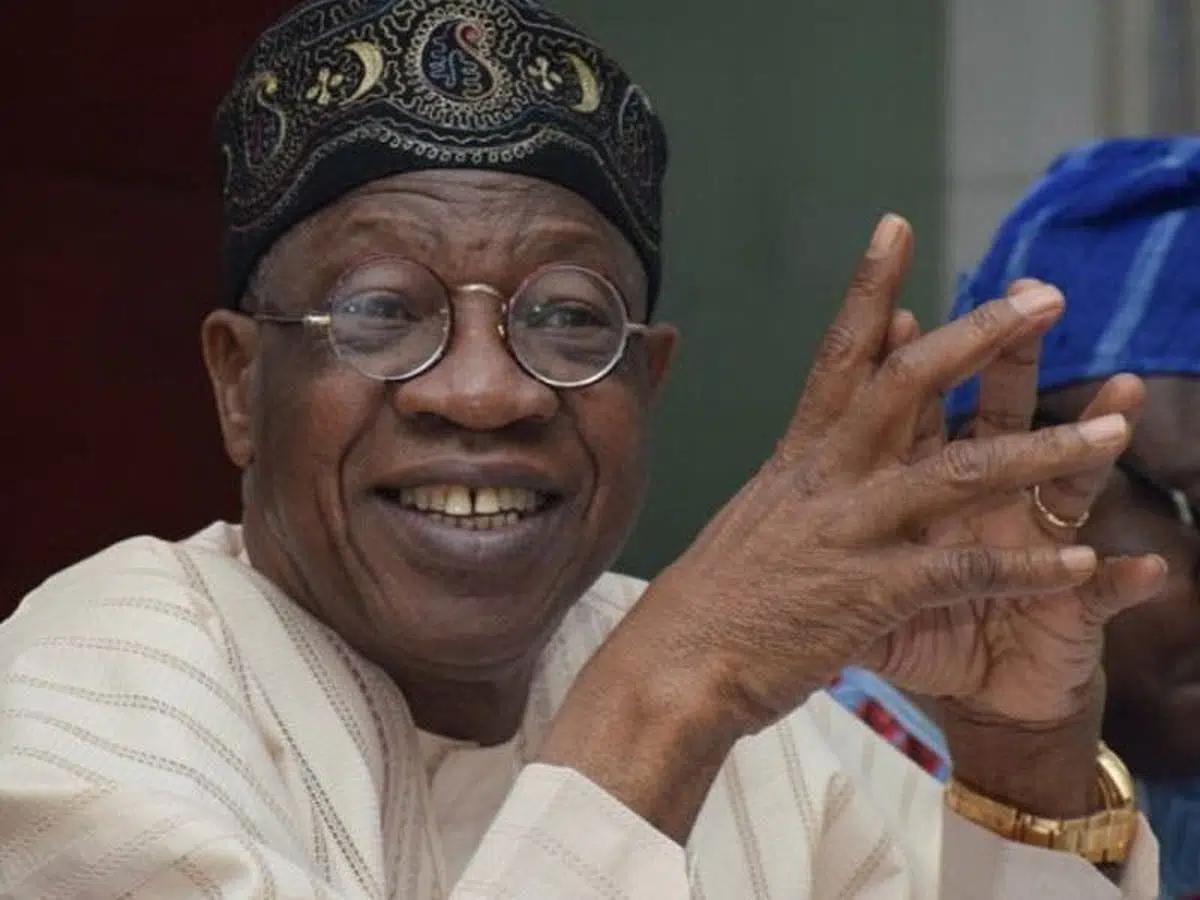
Former Minister of Information and Culture, Lai Mohammed, has shared a revealing look into the inner workings of the Muhammadu Buhari administration, detailing moments of high-stakes political friction and the late President’s unwavering loyalty. In his newly released book, Headlines and Soundbites: Media Moments that Defined an Administration, Mohammed recounts a specific instance where his performance was under fire during a Federal Executive Council (FEC) meeting—only for Buhari to shut down the critics personally.
The incident occurred while Mohammed was in Washington, D.C., for a series of high-level media engagements. In his absence, a fellow minister from the South-West reportedly accused him of failing to effectively communicate the government’s achievements. According to Mohammed’s account, the critic suggested that while the administration was performing well, the Information Minister was “not doing enough.” Buhari, however, interjected immediately, telling the council he had been watching Mohammed’s international media appearances and was impressed by how he was “projecting the administration’s achievements from across the Atlantic.”
This “presidential pat on the back” was not an isolated case of protection. Mohammed also detailed a moment when a petition alleging financial wrongdoing was sent to the President. He recalled the unease of Buhari’s Aide-de-Camp (ADC) before the President eventually addressed the matter. Buhari’s initial reaction was one of total disbelief, famously stating, “Lai? I don’t believe it!” Although the President ordered a standard investigation to maintain due process, the report eventually cleared Mohammed of all allegations, reinforcing the “quiet faith and trust” Buhari placed in his appointees.
The book also touches on a rare moment of tension between the two: the response to former President Olusegun Obasanjo’s scathing 2018 open letter. Buhari, citing military seniority and respect, had initially forbidden any official response. Mohammed describes a “heated debate”—a first in their relationship—where he argued that the government owed the nation a factual rebuttal. Buhari eventually gave a reluctant “go-ahead” but cautioned against any insults. When the final response was published, the President reportedly received numerous calls praising the professional tone, eventually commending Mohammed for the “mature” way he handled the situation.
Reflecting on his eight-year tenure, Mohammed portrays a leader who granted his ministers the “freedom to act,” believing that their responsibilities carried their own wisdom. Despite the “paltry budgets” often allocated to the Information Ministry, Mohammed credits Buhari’s special interventions for making large-scale projects and media tours to reclaimed security zones possible. For the former minister, these anecdotes serve to humanize a leader often perceived as aloof, painting a picture of a boss who was as much a mentor as he was a head of state.

