
NEWS
Atiku and El-Rufai Issue High-Level Christmas Appeal for National Healing
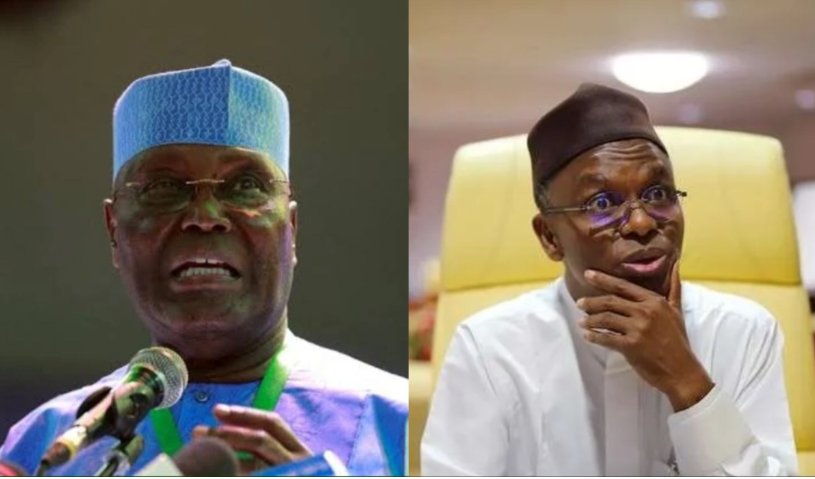
In a moment of significant political and social resonance, two of Nigeria’s most prominent leaders have bypassed traditional partisan rhetoric to issue a unified call for peace as the country marks the 2025 Christmas celebrations. Former Vice President Atiku Abubakar and the former Governor of Kaduna State, Nasir El-Rufai, utilized their digital platforms on Thursday to reach out to a nation currently grappling with deep-seated economic and security anxieties. Their messages, though delivered separately, converged on a singular, urgent theme: the necessity of national reconciliation and the rediscovery of shared values.
Atiku Abubakar, now a key figure within the African Democratic Congress (ADC), framed his message as an appeal to the collective conscience of the Nigerian people. He described the Christmas season as a “solemn reminder” of virtues that have often felt elusive in the nation’s recent history—love, sacrifice, forgiveness, and compassion. For the former Vice President, these are not just religious concepts but the essential ingredients for the survival of the Nigerian state during one of its most challenging periods.
The veteran politician was particularly emphatic about the need to “rise above division.” He noted that the wounds of past political and ethnic skirmishes have left scars that can only be healed through a deliberate commitment to a common destiny. Atiku urged his compatriots to use the holiday not merely for the festivities of the table, but as a window for “quiet reflection and prayer.” He emphasized that seeking divine guidance for justice and peace is a prerequisite for the “renewed hope” that many Nigerians are desperate to find as they look toward 2026.
Nasir El-Rufai, whose voice remains influential in the national discourse, echoed these sentiments with a call for citizens to embrace the values that bind the country together as “one nation under God.” His message was a reminder that despite the diversity of faith and tribe, the core aspirations of the Nigerian people—security, prosperity, and dignity—remain universal. By charging Nigerians to celebrate through the lens of unity, the former Governor sought to reinforce the idea that national strength is found in social cohesion rather than individual or sectional triumphs.
The timing of these messages is significant, coming at a time when Nigeria is navigating a complex transition in its political landscape. With the 2025 Christmas season serving as a backdrop for family reunions and communal gatherings, both leaders recognized that the “spirit of the season” offers a unique opportunity to lower the political temperature. Their appeals suggest a recognition that the current state of the nation requires a ceasefire in the war of words that often characterizes Nigerian public life.
Across the country, the response to these high-level messages has been one of cautious reflection. For many citizens, the calls for unity from such heavyweights are a welcomed departure from the divisive narratives that often dominate the headlines. The emphasis on “healing old wounds” is particularly poignant in a year that has seen significant debate over the direction of the country’s economy and its internal security architecture. Atiku’s focus on forgiveness and El-Rufai’s call for shared values represent a “diplomacy of the heart” aimed at stabilizing the national mood.
As the global Christian community celebrates the birth of Jesus Christ, the messages from Atiku and El-Rufai serve as a bridge between the spiritual and the secular. They have transformed the traditional holiday greeting into a platform for national advocacy, reminding Nigerians that the work of building a country is a continuous process of empathy and cooperation. The two leaders have essentially challenged the citizenry to take the “peace on earth” message of Christmas and apply it directly to the streets, markets, and political hallowed chambers of Nigeria.
The festive period in Nigeria has always been more than just a religious holiday; it is a time of intense social interaction and national introspection. By stepping into this space, Atiku and El-Rufai are attempting to set a tone for the coming year—one that prioritizes the “unity of purpose” over the “division of politics.” As the 2025 celebrations continue, their words remain a haunting yet hopeful reminder that the destiny of the nation lies in its ability to forgive, unite, and move forward as one.


