
NEWS
Army Chief Pledges Dual-Track Strategy to Quell Insecurity in Nigeria
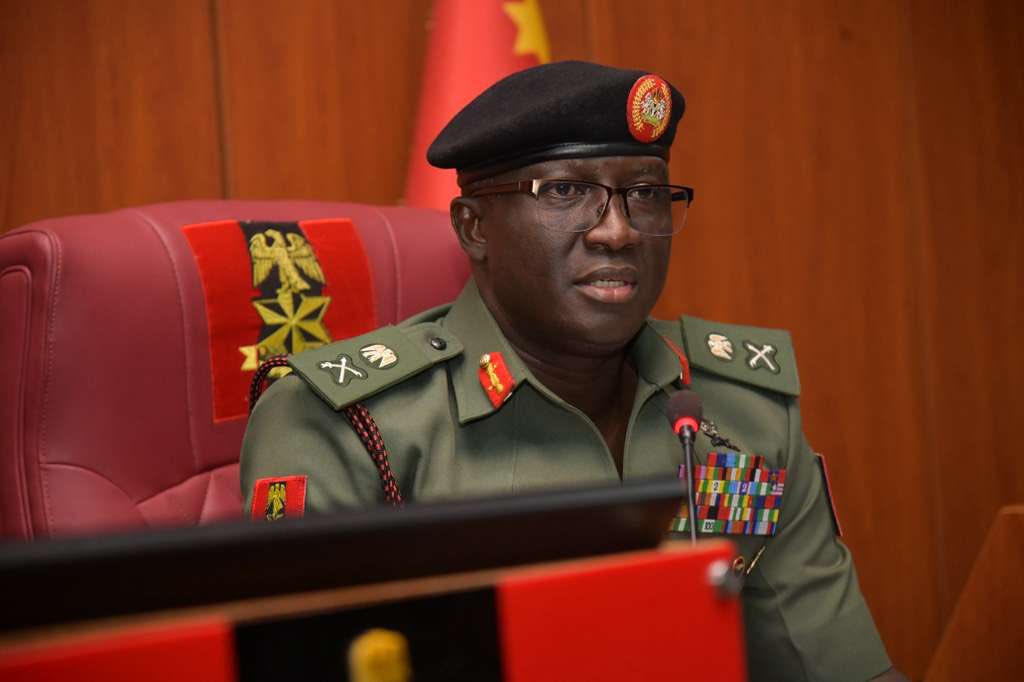
The Nigerian Army is intensifying its multifaceted approach to restoring order across the federation, shifting its focus toward a delicate balance of military might and community-led development. On Thursday, December 25, 2025, the Chief of Army Staff (COAS), Lt.-Gen. Waidi Shaibu, reaffirmed that the military remains committed to pursuing both “kinetic” and “non-kinetic” lines of operation. This dual-track strategy is designed to dismantle criminal networks through combat while simultaneously winning the hearts and minds of the citizenry through social intervention.
Shaibu’s declaration came during a high-profile ceremony in Maradun, Zamfara State, where a newly upgraded 36-classroom Government Day Girls’ Secondary School was officially inaugurated. The project, spearheaded by Maj.-Gen. Mamman Galadima, falls under the Army’s Special Intervention Civil-Military Cooperation (CIMIC) initiative. The choice of location—a state that has long served as a flashpoint for banditry and kidnapping—underscores the Army’s intent to use education and infrastructure as a bulwark against extremist ideologies and social decay.
The COAS, who was represented at the event by Maj.-Gen. WB Idris, Commander of the Theatre Command, Joint Task Force North West (Operation PANSAYAN YAMMA), emphasized that the relationship between the military and the public must be symbiotic. He articulated a vision of an Army that does not operate in a vacuum, stating that while the people require the protection of the military, the Army itself cannot achieve its strategic goals without the active cooperation and trust of the local population.
This philosophy of collaborative security is central to the Army’s current doctrine. By upgrading a school for girls, the military is signaling its long-term investment in the future of Zamfara’s youth, particularly in a region where education has frequently been targeted by non-state actors. The Army chief urged Nigerians to maintain their faith in the armed forces, insisting that the “meritorious and unblemished service” of senior officers like Maj.-Gen. Galadima is a testament to the institution’s dedication to national growth.
The Special Intervention Civil-Military Cooperation project is a strategic honor bestowed upon communities of senior officers who have attained the rank of Major-General. For the people of Maradun, the renovation of the secondary school serves as a tangible dividend of their son’s service to the nation. Shaibu noted that the Army deliberately involves beneficiary communities in every stage of these projects to foster a sense of local ownership, ensuring that the infrastructure is protected and maintained by the very people it serves.
Beyond the brick-and-mortar development, the COAS used the platform to issue a stern reminder about the importance of intelligence gathering. He appealed to the residents of Zamfara to remain vigilant and “forthcoming” with timely, credible information. In the complex landscape of the North West, where bandits often blend into rural communities, the military’s success is heavily dependent on tip-offs that can help prevent attacks before they occur. He argued that a secure environment is the only foundation upon which socio-economic activities can truly thrive.
The Army’s pivot toward non-kinetic operations—which include medical outreaches, water projects, and educational support—is a recognition that the “war on terror” cannot be won by bullets alone. By addressing the underlying socio-economic grievances that often drive young men into the arms of criminal syndicates, the military hopes to dry up the recruitment pools of insurgent groups. This “soft power” approach is viewed as a critical component of the broader 2025 security roadmap.
As the ceremony concluded, the atmosphere in Maradun was one of cautious optimism. The sight of a military command engaging in educational development provides a stark contrast to the traditional imagery of armored convoys and checkpoints. Lt.-Gen. Shaibu assured the state government and the people of Zamfara that the Army would continue to provide the necessary logistical and operational backing to ensure that the “North West theatre” transitions from a zone of conflict to a zone of stability.
The COAS’s message was a clear call for a united front. He reiterated that the Nigerian Army recognizes the people as “critical partners in progress” and promised that the military would continue to work with government authorities at all levels to resolve the country’s security challenges. For the students of the Government Day Girls’ Secondary School, the military’s non-kinetic strategy has provided something invaluable: a safe place to learn and a reason to believe in the state’s protection.