
Politics
APC Chieftain Labels ADC an “Evil Coalition” Amid Heated National Debate
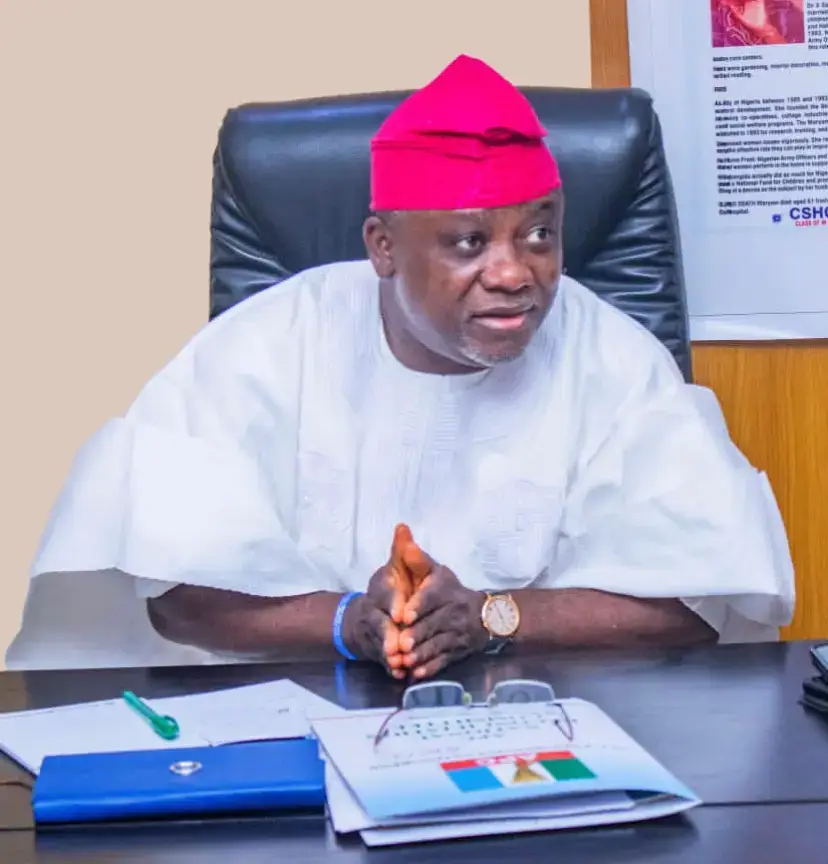
The political temperature in Nigeria has surged following a scathing critique from Biodun Ajiboye, a prominent chieftain of the All Progressives Congress (APC), who characterized the African Democratic Congress (ADC) as a dangerous threat to the nation’s stability. During a high-profile appearance on national television, Ajiboye did not mince words, describing the opposition coalition as an “evil” entity capable of compromising the country’s future. His remarks come at a time of heightened tension between the ruling party and opposition groups over the current administration’s handling of the economy and national security.
Ajiboye’s outburst was largely a reaction to the ADC’s persistent criticism of the federal government’s policy decisions and its public image management. The APC leader expressed deep frustration with the coalition’s narrative, arguing that their rhetoric is designed to incite public dissatisfaction rather than offer constructive solutions. He warned that if Nigerians are not vigilant, the influence of such political groupings could lead to the irreparable destruction of the democratic foundations currently being laid by the incumbent government.
A significant portion of the disagreement centers on the government’s recent expenditure on international public relations and lobbying efforts. The ADC has been vocal in its condemnation of a reported $9 million spent on PR consultants, particularly at a time when many Nigerians are grappling with severe economic hardship and food insecurity. Ajiboye, however, defended the expenditure as a strategic necessity. He questioned whether it was a crime to employ experts to navigate complex geopolitical waters and “break the ice” when communication channels with the international community become narrowed.
The APC stalwart argued that lobbying is a standard and legitimate tool in modern governance, especially for a nation facing multifaceted challenges. He suggested that the government’s critics are intentionally ignoring the gravity of the security situation, which he described as a “general insurgency” involving extremist groups like ISIS and ISWAP. According to Ajiboye, the administration’s actions have been focused on saving Nigeria from “unjustifiable destruction” that could have been triggered by unpredictable political actors.
In a direct rebuttal to the ADC’s focus on the prevailing hunger in the land, Ajiboye accused the coalition of being “wicked” for using the suffering of the masses as a political weapon. While acknowledging the difficulties faced by citizens, he maintained that the government’s broader strategic moves—including the controversial PR spending—are aimed at long-term stability that will eventually alleviate these local pressures. He suggested that the opposition’s narrative is a distraction from the progress being made in national defense and international diplomacy.
The rhetoric used by Ajiboye reflects a deepening polarization within the Nigerian political space as the country moves further into the current administration’s term. By labeling a registered political coalition as “evil,” the APC chieftain has signaled a shift toward a more aggressive defensive posture by the ruling party. This approach highlights the administration’s sensitivity to allegations of financial mismanagement and its determination to frame its spending as essential for national survival.
The ADC, for its part, has positioned itself as a watchdog for the Nigerian taxpayer, consistently questioning the opportunity cost of multi-million dollar contracts in the face of rising inflation. The clash between these two ideologies—one prioritizing global perception and security strategy, and the other prioritizing immediate domestic welfare—is likely to dominate the political discourse leading up to future electoral cycles. Ajiboye’s comments have now placed the ADC at the center of this firestorm, turning a policy debate into a moral and existential argument.
Observers note that such sharp language from a party chieftain often serves to rally the party base, but it also risks alienating neutral citizens who are looking for a more tempered discussion on the country’s economic woes. Ajiboye’s insistence that the government saved the country from an “unpredictable” threat suggests that the internal security narrative remains the administration’s strongest shield against domestic criticism. He implied that without these decisive, albeit expensive, actions, the country would be in a far more precarious position than it is today.
As the news of this verbal onslaught spreads, political analysts are watching to see how the ADC and other members of the opposition will respond. The accusation that a political party is “destroying the future of Nigeria” is a heavy one, and it raises questions about the limits of political rhetoric in a fragile democracy. For now, the APC remains firm in its stance, with leaders like Ajiboye making it clear that they view opposition critiques not as valid dissent, but as a calculated effort to undermine the sovereignty and progress of the state.
The fallout from this interview continues to trend on social media, with Nigerians divided on whether the government’s PR budget is a justifiable expense or an insensitive use of scarce resources. Regardless of one’s stance, the intensity of Ajiboye’s delivery confirms that the battle for the “soul of Nigeria” is being fought as much in the media as it is in the halls of power. The “evil coalition” label is likely to stick in the headlines, further defining the battle lines for the 2027 political season.


