
NEWS
Rivers Crisis: The Secret Budget War Fueling the Push to Oust Fubara
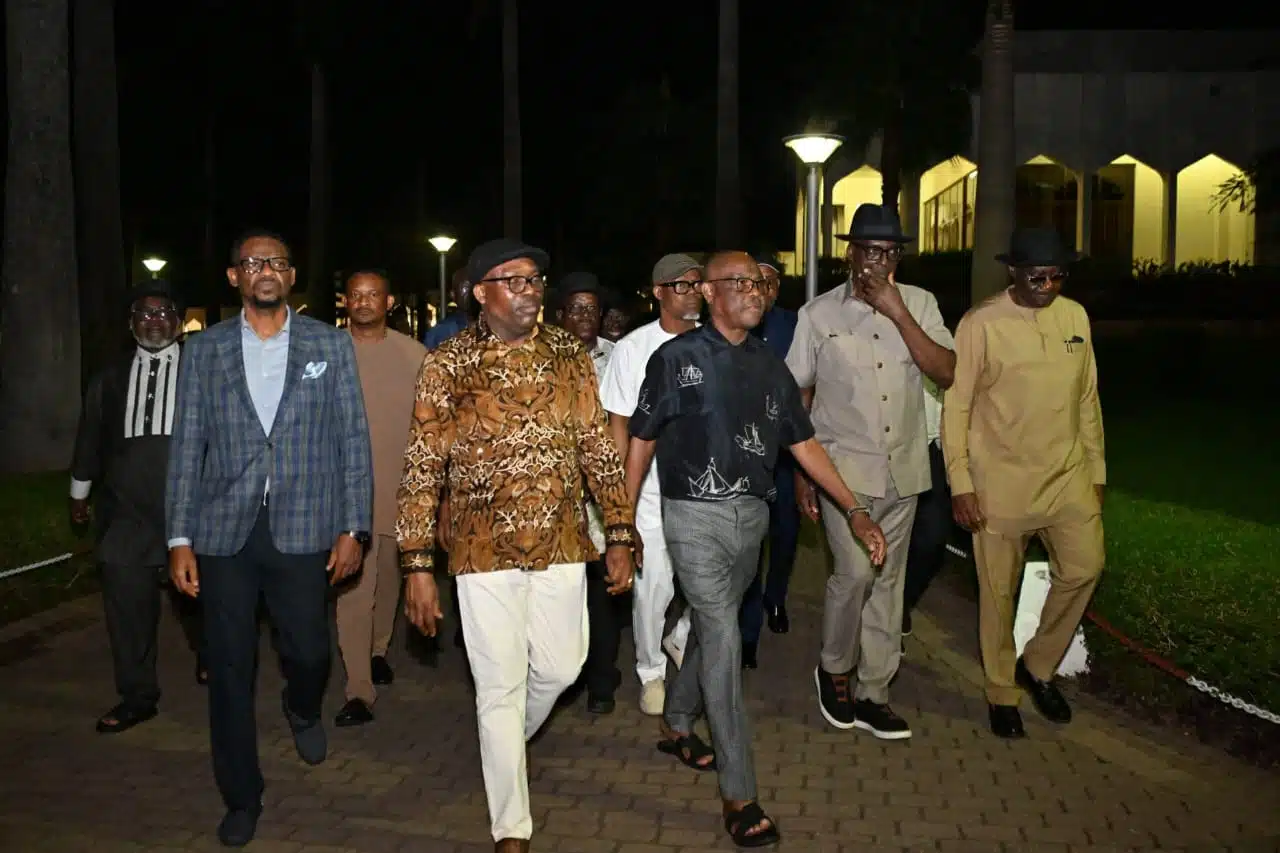
The political atmosphere in Rivers State has reached a fever pitch as the battle lines between Governor Siminalayi Fubara and his predecessor, Nyesom Wike, move from subtle friction to open warfare. While the public narrative often focuses on personality clashes and a struggle for regional dominance, fresh insights suggest the current impeachment drive is fueled by something far more tangible: a dispute over billions of naira in constituency funding. At the heart of the crisis is the Governor’s firm refusal to present a supplementary budget, a move that has reportedly stripped lawmakers of promised financial windfalls.
According to high-level sources familiar with the legislative friction, the House of Assembly members loyal to Wike, the current Minister of the Federal Capital Territory, are motivated by a stalled financial pipeline. It is alleged that a promise of ₦10 billion worth of constituency projects was dangled before pro-Wike lawmakers, with the expectation that these funds would be captured in a new supplementary budget. When Governor Fubara declined to endorse this financial plan, the legislative goodwill evaporated, replaced by a swift and coordinated move to remove him from office.
The stakes of this budgetary standoff are underscored by the history of recent disbursements in the state. Investigations into the state’s financial records have already unearthed a controversial payment cycle that occurred in September 2025. During that period, while the state was navigating a complex administrative landscape, at least 26 lawmakers were reported to have received ₦350 million each for constituency projects. These payments, which totaled approximately ₦10.5 billion, were supposedly intended for grassroots development but have since become a point of intense scrutiny.
Financial documents revealed that these funds were approved with startling speed, yet the reality on the ground paints a different picture. On-site assessments across various constituencies suggest that the promised projects remain non-existent. Furthermore, the companies nominated to receive these massive sums were often found to be inactive, dormant, or recently incorporated shell entities. This pattern of “ghost projects” has deepened the rift between the executive and the legislature, as the Governor appears increasingly unwilling to facilitate another round of similar disbursements through a supplementary budget.
The political timeline of the state explains how the tension reached this breaking point. Rivers State had been under a period of emergency rule since March 2025, a measure taken to stabilize the region following the initial fallout between Fubara and Wike. Although President Bola Ahmed Tinubu lifted the emergency rule in September 2025, the peace was fragile and short-lived. Rather than a return to collaborative governance, the resumption of official duties only provided a formal platform for the impeachment proceedings that were eventually initiated in early 2026.
Led by Speaker Martins Amaewhule, the pro-Wike faction of the House has leveled allegations of gross misconduct against both Governor Fubara and his deputy, Professor Ngozi Odu. While the formal notices cite constitutional breaches, the underlying resentment over the “denied” supplementary budget remains the primary driver behind the scenes. The determination of the lawmakers is evident in their shifting stances; even those who briefly called for dialogue eventually returned to the impeachment fold, insisting that the process must be seen through to the end.
For Governor Fubara, the refusal to sign off on the supplementary budget is being framed by his supporters as an act of fiscal responsibility and an attempt to break free from a cycle of political patronage. However, for his opponents in the House, it is viewed as a betrayal of a political arrangement that keeps the legislative machinery oiled. This fundamental disagreement over the control and distribution of state resources has effectively paralyzed the governance of one of Nigeria’s most economically vital states.
As the impeachment process unfolds, the eyes of the nation are on Port Harcourt. The crisis serves as a stark reminder of the complexities of “godfatherism” in Nigerian politics and the volatile nature of state finances when they become entangled in personal loyalties. With the Governor standing his ground and the lawmakers sharpening their legislative tools, the path forward for Rivers State remains clouded by uncertainty and the looming shadow of an unprecedented double impeachment.
The outcome of this struggle will likely redefine the power dynamics in the Niger Delta for years to come. Whether Fubara can survive the onslaught of a legislature hungry for constituency allocations, or whether the Wike-backed lawmakers will succeed in resetting the state’s leadership, remains the most critical question in Nigerian local politics today.


