
Politics
Atiku’s Democratic Tolerance Shines as Son Joins Rival APC
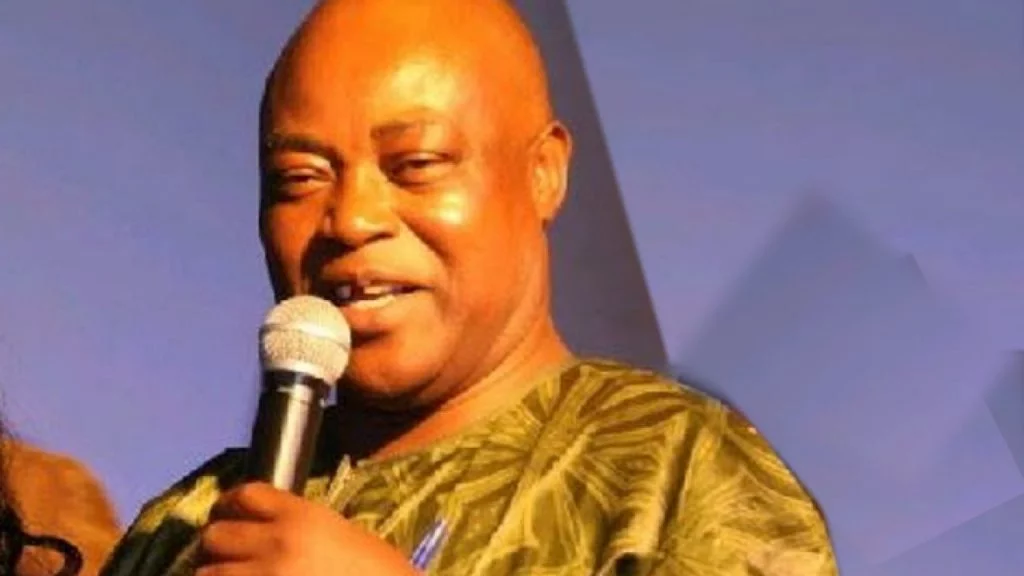
The Nigerian political landscape recently witnessed a rare display of ideological flexibility that has set tongues wagging across the federation. At the center of this discourse is the former Vice President, Atiku Abubakar, whose son, Abubakar Atiku Abubakar—familiarly known as Abba—formally defected from the Peoples Democratic Party (PDP) to the ruling All Progressives Congress (APC). While such a move might spark domestic friction in many households, the reaction from the elder Atiku has drawn unexpected praise from across the aisle.
Eze Chukwuemeka Eze, a prominent chieftain of the APC, has stepped forward to commend the former Vice President for what he describes as a masterclass in political maturity. According to Eze, Atiku’s decision to respect his son’s individual political journey, despite it leading into the camp of a direct rival, elevates the standard of democratic engagement in Nigeria. He noted that this development serves as a poignant reminder that family ties and political affiliations can, and perhaps should, exist in separate spheres.
In a detailed communiqué released on Tuesday, Eze lauded Atiku as a “sagacious trailblazer” and a “humane” figure within the African democratic space. He argued that the former Vice President’s stance is not merely a family matter but a profound moral lesson for the nation’s political class. By allowing his son the freedom to choose his own path, Atiku has demonstrated an unblemished commitment to the principles of choice and association, which are the very bedrocks of a free society.
The move has triggered a firestorm of debate on social media, with digital analysts split on the timing and intent of Abba’s defection. Some critics labeled the transition as ill-timed or politically risky, yet Eze views it through a different lens. He suggests that the focus should remain on the “rare democratic maturity” displayed by the father. In Eze’s estimation, this act places Atiku on a high pedestal, comparable to the historical political dynasties that managed to maintain internal cohesion despite varied external loyalties.
Specifically, Eze likened the Atiku family’s current dynamic to the Saraki dynasty, citing their long-standing reputation for political tolerance and acceptability. He stressed that a true democrat is defined by their actions when their personal interests or pride are at stake. By supporting his son’s autonomy, Atiku has, in Eze’s words, “raised the bar of democracy,” proving that his rhetoric about being a refined and principled leader is backed by genuine action.
However, the praise for Atiku was accompanied by a sharp critique of the current administration. Eze utilized the moment to contrast Atiku’s “tolerance” with what he characterized as the “coercive” nature of President Bola Ahmed Tinubu’s leadership. The APC chieftain accused the presidency of using state institutions to intimidate and weaken the opposition ahead of the 2027 general elections. He argued that being a President does not inherently make one a democrat, especially if that power is used to stifle dissenting voices.
Eze further alleged that there is a systematic effort underway to dismantle opposition structures through “witch-hunts” and “crude” political tactics. He posited that these actions ultimately benefit Atiku’s reputation in the long run. In the eyes of many observers, the contrast between a leader who allows dissent within his own home and a leader who allegedly suppresses it within the nation is a powerful narrative that could shape future electoral cycles.
This development comes at a time when Atiku is reportedly eyeing the presidential ticket of the African Democratic Congress (ADC), signaling that his political ambitions remain as vibrant as ever. Despite his own shifting party affiliations, his insistence that his son’s move to the APC was a purely personal decision underscores a level of domestic liberalness that is seldom seen in the high-stakes environment of Nigerian power-broking.
As the 2027 election cycle begins to loom on the horizon, the narrative of “freedom of choice” is likely to become a central theme. Eze’s intervention highlights a growing sentiment that the quality of Nigeria’s democracy is measured not just by the ballot box, but by the level of respect accorded to individuals to navigate the political spectrum without fear of retribution.
The conversation sparked by Abba’s defection continues to resonate, serving as a litmus test for how Nigerians view political loyalty versus individual rights. For now, Atiku Abubakar emerges from this family transition not just as a veteran politician, but as a father who prioritizes democratic principles over partisan conformity. This “uncommon sagacity” may well become a defining chapter in his long and storied political career, offering a blueprint for how future leaders might handle the complex intersection of family and state.


