
Politics
Amaechi Reveals Why Buhari Stalled Electoral Reforms
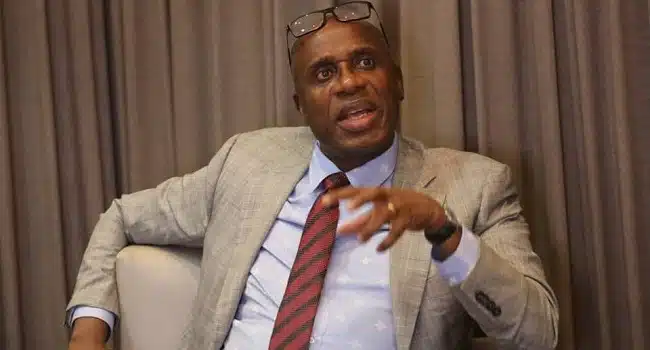
Rotimi Amaechi, the former Minister of Transportation, has offered a rare glimpse into the internal power struggles of the previous administration, claiming that the late President Muhammadu Buhari was deterred from signing critical electoral reforms by fears of foreign interference. During a high-profile public lecture, Amaechi alleged that an atmosphere of paranoia, including specific claims that “Russia will rig the election,” was used to paralyze the legislative process at the highest level.
Amaechi’s critique suggests that while Buhari initially harbored a genuine desire to leave a legacy of transparent elections, his resolve was weakened by entrenched interests within his inner circle. He described a moment of high drama where the National Assembly had passed the reform bill and “dropped it on his table.” According to the former minister, Buhari was physically holding his pen to sign the document before being dissuaded by aides who stoked fears of technological vulnerabilities and international manipulation.
The former governor of Rivers State expressed frustration with the narrative presented to the President at the time. “I wish I were there,” Amaechi lamented during the lecture, stating that he would have argued that every geopolitical threat has a counter-measure. He suggested that if fears of Russian interference were being used as a bogeyman, the administration should have leaned on other global partners to safeguard the system rather than abandoning the reforms altogether.
According to Amaechi, the resistance to reform was not merely about foreign policy but about domestic power preservation. He noted that by 2023, Buhari had become more determined to pass the law, viewing it as his final contribution to Nigerian democracy. However, he alleged that the process was sabotaged in the National Assembly, where lawmakers deliberately omitted provisions that would have protected “automatic delegates,” including former speakers like Amaechi himself.
When the President noticed these strategic omissions, which effectively disenfranchised certain political pillars, he reportedly refused to sign the version presented to him. Amaechi highlighted the irony of seeing those same individuals who allegedly blocked the 2023 reforms now publicly calling for new electoral changes. He characterized their current advocacy as opportunistic, given their roles in stalling the progress they now claim to desire.
Drawing on his experience as the director-general of Buhari’s successful campaigns, Amaechi emphasized that no law can replace the power of a mobilized citizenry. He recounted how, during the 2015 and 2019 cycles, the sheer presence of passionate voters served as a deterrent to electoral malpractice. He claimed that the “madness of the citizens” was so formidable that it effectively chased potentially corrupt governors out of their own states during presidential visits.
Amaechi’s comments serve as a warning that electoral integrity in Nigeria remains vulnerable to the whims of the executive and the self-interest of the legislature. He concluded that no incumbent government is truly capable of delivering total reform because the changes required often undermine the very power structures that keep them in office. For him, the failure of the Buhari reforms is a case study in how fear and elite manipulation can derail the democratic aspirations of millions.
As the conversation around the 2027 general elections begins to intensify, Amaechi is positioning himself as a vocal critic of the status quo. His revelations about the “Russia rigging” claims provide a new layer of context to the long-standing delays that have characterized Nigeria’s journey toward a digital and transparent voting system. The question remains whether the current administration will learn from these past failures or continue the pattern of stall tactics described by the former minister.


