
Politics
Kwankwaso’s Ally Mustapha Shu’aib Quits NNPP Amid Rising Political Uncertainty
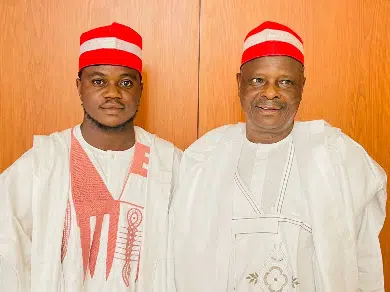
The New Nigeria Peoples Party (NNPP) has been hit by a significant internal tremor as Mustapha Shu’aib, a prominent associate of the party’s 2023 presidential candidate, Rabiu Musa Kwankwaso, officially announced his resignation. Shu’aib, who made headlines in the 2023 general elections as the youngest candidate when he contested the Bida North Constituency seat in the Niger State House of Assembly, confirmed his departure following a series of high-level consultations. The move signals a potential fracture within the Kwankwasiyya movement, as one of its most visible young faces seeks a “new political path” to broaden his impact on public service.
Speaking on the motivations behind his exit, Shu’aib clarified that his resignation should not be misinterpreted as a retirement from active politics. Instead, he framed the decision as a strategic pivot intended to explore fresh alignments that better serve his supporters and community leaders across Niger State. While the young politician has not yet unveiled his next destination, his departure comes at a sensitive time for the NNPP, which is currently grappling with rumors of high-profile defections and a potential collapse of its influence in Northern Nigeria.
The timing of Shu’aib’s exit is particularly delicate given the stalled negotiations between the All Progressives Congress (APC) and the NNPP national leader, Senator Kwankwaso. Recent reports suggest that a proposed alliance or merger between the two parties has hit a deadlock due to what insiders describe as Kwankwaso’s “stringent conditions” for joining the ruling party. The deadlock has reportedly led the APC leadership to suspend further discussions, leaving the final decision to President Bola Ahmed Tinubu, who is currently out of the country on official business.
This administrative gridlock has also thrown the political future of Kano State Governor, Abba Kabir Yusuf, into a state of flux. The Governor, a known protégé of Kwankwaso, was widely expected to defect to the APC in a move that would have dealt a terminal blow to the NNPP’s national standing. However, the official reception ceremony for the Governor has been postponed twice this month—first on January 5 and again on January 12—as his political mentor continues to hesitate on the terms of the merger.
Sources within the APC indicate that the ruling party is becoming increasingly frustrated with the “prolonged hesitation” from the Kwankwaso camp. The uncertainty has caused a ripple effect in Kano politics, where power blocs led by APC National Chairman Abdullahi Ganduje are reportedly wary of how a potential influx of Kwankwasiyya loyalists might reshape the state’s political hierarchy. For Governor Yusuf, the delay in defecting has created a precarious middle ground, leaving him at the helm of a party that his inner circle is already preparing to abandon.
The departure of Mustapha Shu’aib may embolden other disgruntled members within the NNPP to seek alternative platforms before the 2027 electoral cycle gains full momentum. Analysts suggest that the “generational statement” being made by younger politicians like Shu’aib reflects a growing impatience with the traditional “godfather” dynamics that have historically dictated the movement of political actors in the North. If more key allies continue to jump ship, the NNPP risks losing its vibrant grassroots appeal, which was largely built on the energy of its youth wing.
As the political landscape in Niger and Kano states continues to shift, the eyes of the nation remain on the presidency for a final verdict on the APC-NNPP negotiations. The failure to reach a conclusion could result in a permanent rift between Kwankwaso and his most powerful political student, Governor Yusuf, potentially leading to a three-way battle for supremacy in Kano. For now, Mustapha Shu’aib remains a political free agent, a status that is likely to attract significant interest from both the APC and the Peoples Democratic Party (PDP) as they look to consolidate their influence in the North-Central region.
The coming weeks will likely reveal whether Shu’aib’s exit is an isolated incident or the first in a series of defections that could redefine the NNPP’s future. With the APC’s plans on hold and the NNPP’s “youngest candidate” looking for a new home, the volatility of Nigerian politics is once again on full display. The focus shifts to the return of President Tinubu, whose intervention is now seen as the only key capable of unlocking the current stalemate and determining the ultimate fate of the Kwankwasiyya movement.


