
NEWS
Supreme Court Revives Lamido’s ₦1.35 Billion Fraud Trial
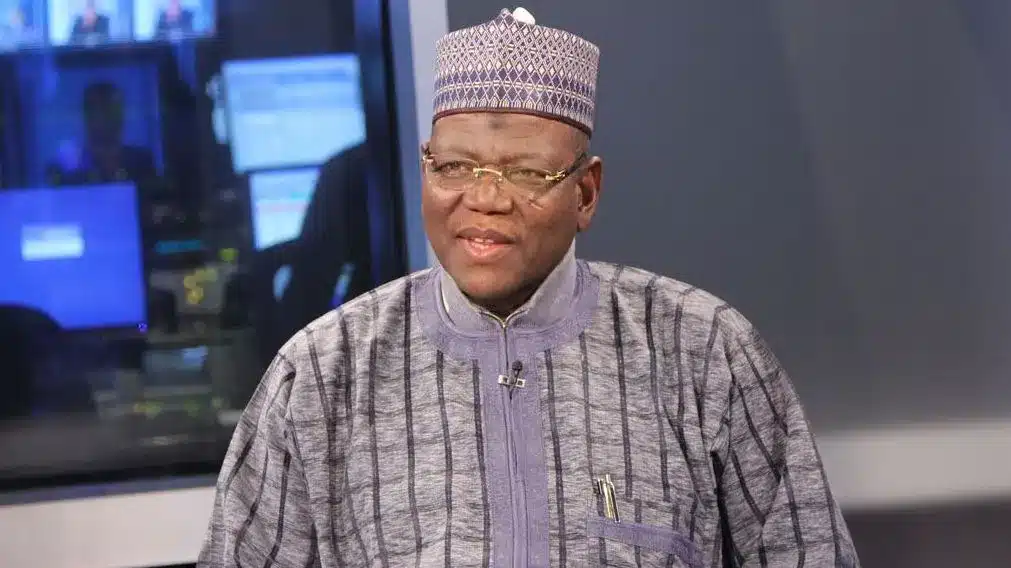
The Supreme Court of Nigeria has delivered a definitive blow to the efforts of former Jigawa State Governor Sule Lamido to evade a long-standing corruption trial. In a unanimous decision reached on Friday, a five-member panel of the apex court ordered that the ₦1.35 billion fraud case against the former governor, his two sons, and their associates must proceed at the Federal High Court in Abuja. This ruling effectively overturns a previous victory for the Lamido family and sets the stage for a high-stakes legal showdown that has already spent years winding through the Nigerian judicial system.
The apex court’s intervention follows a contentious journey through the appellate courts. In July 2023, the Court of Appeal in Abuja had quashed the 37-count charge brought by the Economic and Financial Crimes Commission (EFCC), upholding the “no-case” submissions filed by the defendants. At that time, the appellate court argued that the Federal High Court lacked the proper jurisdiction to hear the matter, a technicality that briefly halted the prosecution’s momentum. However, the Supreme Court has now categorically rejected that stance, ruling that the trial court was entirely within its rights to demand that the defendants present their side of the story.
Justice Abubakar Umar, who delivered the lead judgments, was clear in his assessment that the initial ruling by Justice Ijeoma Ojukwu of the Federal High Court should stand. By reinstating the trial, the Supreme Court has affirmed that the prosecution provided enough evidence to move beyond the preliminary stages. The decision serves as a significant validation for the EFCC, which has spent nearly a decade investigating the financial dealings of the Lamido administration. The agency’s appeals were rooted in the belief that the public interest is best served by a full trial on the merits of the evidence rather than a dismissal based on jurisdictional disputes.
The allegations at the heart of this legal battle are substantial and deeply rooted in the political history of Jigawa State. The EFCC alleges that between 2007 and 2015, while serving as governor, Sule Lamido abused his high office to facilitate a massive money laundering operation. The prosecution’s case hinges on the claim that the governor received significant “kickbacks” from private companies that were awarded lucrative government contracts. These illicit payments, totaling approximately ₦1.35 billion, were allegedly funneled through a network of bank accounts and corporate entities to hide their true origin and beneficiary.
This case is particularly striking because of the involvement of the former governor’s immediate family. Standing alongside Sule Lamido are his sons, Aminu and Mustapha Lamido, whom the EFCC describes as key participants in the alleged financial misconduct. The trial also involves Aminu Wada Abubakar and two companies, Bamaina Holdings Limited and Speeds International Limited. By targeting both the individuals and the corporate vehicles allegedly used to move the funds, the anti-graft agency has attempted to dismantle what it describes as a sophisticated family-run enterprise built on the misappropriation of state resources.
The Supreme Court’s ruling on Friday essentially clears the legal path that has been blocked for years. For the residents of Jigawa State and the wider Nigerian public, the decision represents a move toward accountability for those who have held the highest offices in the land. Sule Lamido, a prominent and often vocal figure within the People’s Democratic Party (PDP), has consistently denied all wrongdoing, frequently suggesting that the case against him is a form of political persecution. With the apex court’s directive, the theater of this conflict now moves back to the courtroom, where political rhetoric must give way to documented evidence and witness testimony.
Legal experts have noted that the Supreme Court’s decision to overrule the “no-case” submission is a strong indicator that the judiciary is becoming less tolerant of technical delays in high-profile corruption matters. By requiring the defendants to open their defense, the court is ensuring that the details of the ₦1.35 billion transactions are scrutinized under oath. This phase of the trial is expected to be a grueling process, involving the cross-examination of several witnesses and the presentation of complex financial records that have been gathered by the EFCC’s forensic teams since the investigation first opened.
As the case returns to the Federal High Court in Abuja, the pressure is back on the Lamido legal team to provide a plausible explanation for the flow of funds cited in the 37-count charge. For the EFCC, the challenge will be to maintain the integrity of its evidence after so much time has passed. The trial is more than just a legal proceeding; it is a test of the Nigerian state’s ability to prosecute complex financial crimes involving powerful political dynasties. The eyes of the national and international community will be on Justice Ijeoma Ojukwu’s courtroom as the proceedings resume.
In the broader context of Nigeria’s fight against corruption, the Lamido case remains a bellwether for the effectiveness of the nation’s anti-graft laws. If the prosecution can successfully navigate the defense’s arguments, it will mark one of the most significant convictions of a former governor in recent history. Conversely, if the defense can dismantle the EFCC’s narrative, it will serve as a high-profile rebuke of the agency’s investigative methods. Regardless of the final outcome, the Supreme Court has ensured that the story of the ₦1.35 billion does not end in a silent dismissal, but in a public search for the truth.


