
NEWS
Police Stand Firm: NPF Declines Public Disclosure on Christmas Day US Strikes
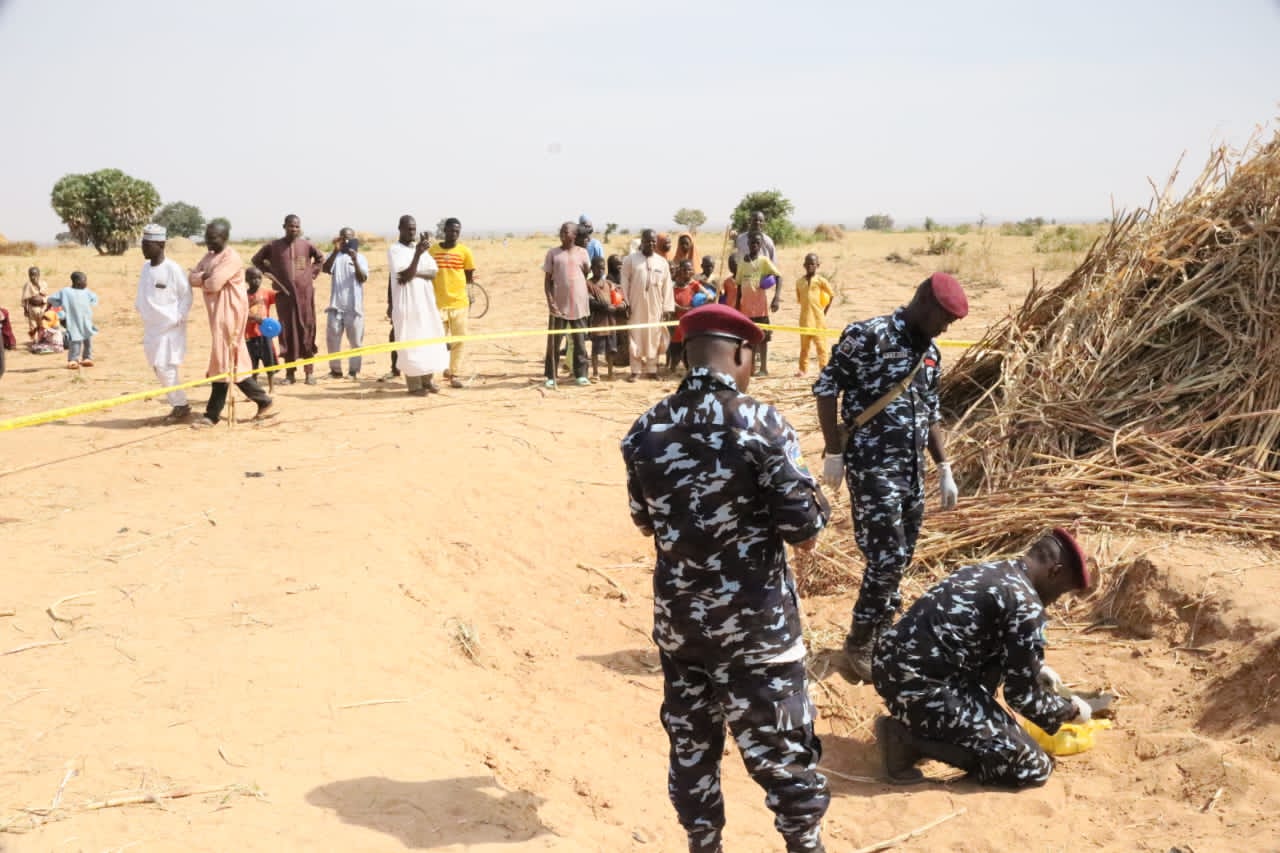
The Nigeria Police Force (NPF) has officially waded into the debate surrounding the recent U.S. military strikes in Sokoto State, confirming they possess sensitive intelligence while simultaneously declining to release details to the public. Speaking on Channels Television’s Politics Today on Tuesday, January 13, 2026, NPF spokesperson Benjamin Hundeyin clarified that while the police were actively involved in the intelligence loop, the operation remains a “defense matter” under the jurisdiction of the military and the Ministry of Defence.
The strikes, which occurred on December 25, 2025, were part of a high-stakes joint operation involving the U.S. Navy and Nigerian forces. Reports indicate that approximately a dozen Tomahawk missiles were launched from a U.S. destroyer in the Gulf of Guinea, targeting enclaves of the ISIS-affiliated group Lakurawa in the Isa and Tangaza local government areas of Sokoto. While the missiles successfully neutralized an estimated 155 militants, the aftermath was marked by the discovery of metal debris in Jabo town, roughly 60 miles from the primary impact zone.
Hundeyin’s refusal to divulge specifics highlights the delicate balance between domestic policing and international military operations. He emphasized that the NPF’s role was primarily focused on intelligence gathering rather than public commentary. “As the Police Force, we know certain things about the strikes, but we don’t want to talk about them,” Hundeyin explained, stressing that revealng operational details could compromise future intelligence gathering or jeopardize national security protocols.
The operation has sparked significant diplomatic and social discussion. U.S. President Donald Trump, who announced the strikes on his Truth Social platform, described them as “perfect” and framed the mission as a “crusade” to protect Nigerian Christians. This narrative, however, has been met with firm pushback from the Nigerian government. Foreign Minister Yusuf Tuggar reiterated that the operation was not targeted at any particular religion, emphasizing that terrorism is a regional conflict affecting all faiths across the Northwest.
The Nigerian government continues to reject the “Christian genocide” label recently applied by the U.S. administration, asserting that the conflict is driven by complex socio-economic factors and resource competition. While the U.S. Department of Defense reported the strikes as a “deadly” success against “ISIS terrorist scum,” the Nigerian Foreign Affairs Ministry has focused on the collaborative nature of the mission. They maintain that the strikes were authorized by President Bola Ahmed Tinubu to safeguard all Nigerian lives and properties, regardless of religious inclination.
The discovery of debris hundreds of miles away from the target has added a layer of domestic concern to the international incident. In Kwara State, the NPF was forced to deploy anti-bomb squads to secure fragments of the U.S. missiles that fell on farmland. Despite the physical evidence on the ground, the NPF remains tight-lipped, referring all technical queries to the Ministry of Defence. This “opaque” approach, as some security analysts have noted, aims to prevent panic while the military conducts a full post-strike assessment of the casualties and strategic impact.