
NEWS
Tinubu Moves to Shield Fubara as Wike Retreats Into Silence
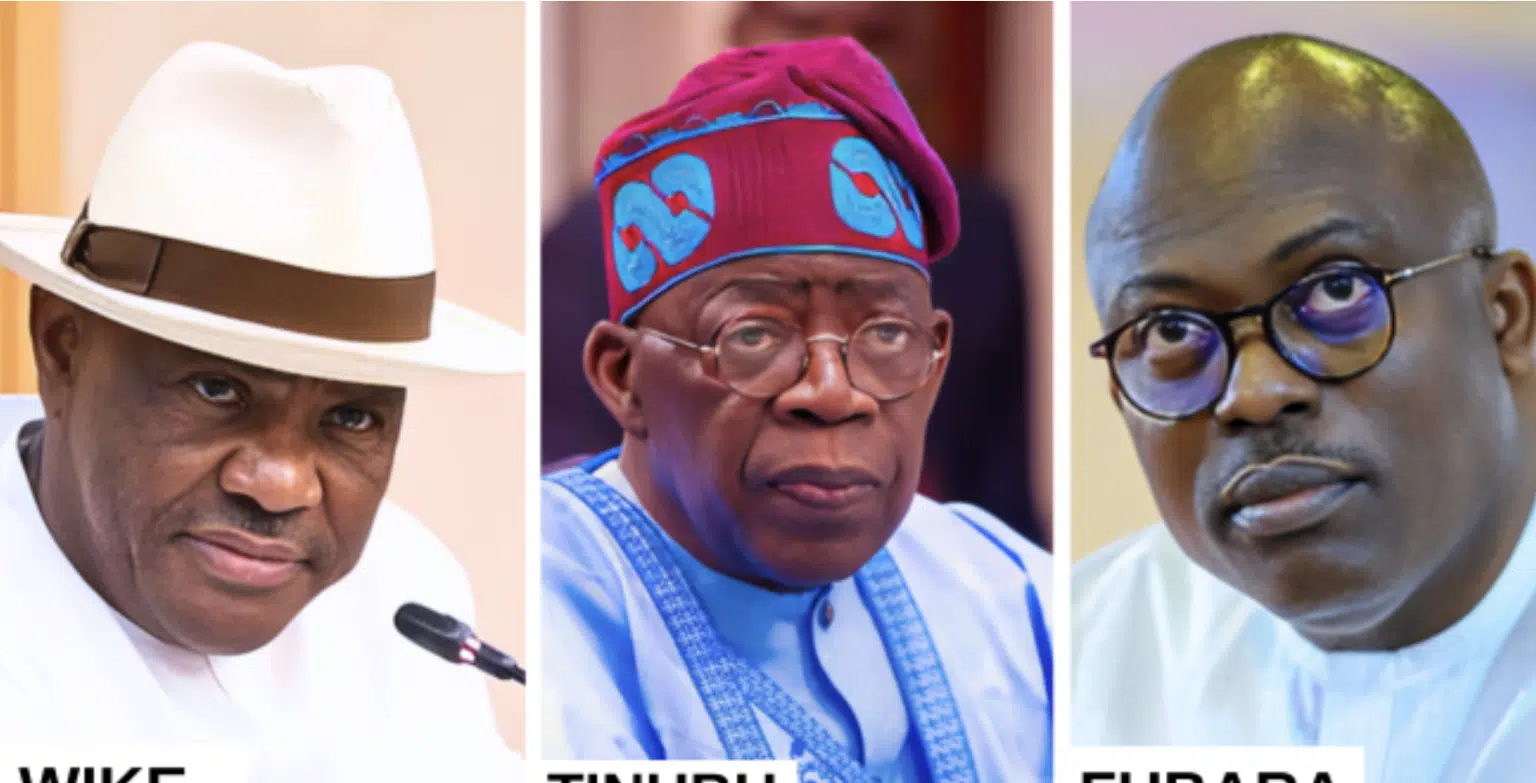
The political atmosphere in Rivers State has reached a fever pitch following the dramatic initiation of impeachment proceedings against Governor Siminalayi Fubara and his deputy, Ngozi Odu. However, in a surprising twist that has reshaped the conflict, President Bola Tinubu and high-ranking leaders of the All Progressives Congress (APC) have reportedly stepped in to block the ouster. The move signals a major shift in the power dynamics of the oil-rich state, as the Presidency appears to be prioritizing stability over the local grievances of partisan loyalists.
Governor Fubara, who is currently reported to be out of the country, has not yet been formally served with the impeachment notice issued by the state’s House of Assembly. Despite his physical absence from the state, his political standing has been bolstered by an unexpected wave of support from the very top of the national government. Sources within the APC suggest that the Presidency views the continued targeting of the Governor as a threat to regional peace and a distraction from national governance.
The shifting tide became evident through recent public endorsements from critical national figures. Senator Ajibola Basiru, the National Secretary of the APC, and Malam Nuhu Ribadu, the National Security Adviser, have both issued statements commending the Governor’s administration. Crucially, these officials have begun recognizing Fubara as the de facto leader of the political structure in Rivers, a move that directly challenges the influence of his predecessor and former mentor.
This internal push to save the Governor’s mandate is not limited to the federal executive. Powerful regional governors and ministers are also lining up behind the embattled leader. Senator Hope Uzodimma, the Imo State Governor and Chairman of the APC Governors Forum, along with Transport Minister Senator Dave Umahi, are said to be among those pushing for a diplomatic resolution. Their involvement suggests a broader consensus among the APC elite to prevent a total collapse of the executive arm in Rivers State.
Regional socio-political groups have also intensified their lobbying efforts at the Villa. The Pan-Niger Delta Elders Forum (PANDEF) has emerged as a vocal advocate for the Governor, urging President Tinubu to intervene decisively. Anabs Sara-Igbe, a prominent elder from the region, emphasized that the state cannot afford the tension generated by a third attempt to remove the Governor. These stakeholders argue that the constant threats of impeachment serve only to stall development in a state that is vital to the nation’s economy.
While the Presidency and national APC leaders are making their positions clear, the most striking aspect of the current crisis is the sudden change in demeanor of Nyesom Wike, the Minister of the Federal Capital Territory. Wike, whose loyalists in the House of Assembly are driving the impeachment move, has historically been very vocal about his disagreements with Fubara. In previous months, he was frequently seen singing and dancing at public gatherings while delivering sharp criticisms of his successor’s performance.
However, during a “thank you” visit to Andoni Local Government Area on Friday, the usually boisterous Minister appeared uncharacteristically sober and restrained. Wike spent less than five minutes addressing the gathered crowd and completely avoided the topic of the ongoing impeachment proceedings. This uncharacteristic silence has led many observers to believe that the Minister has been reigned in by the Presidency or is reassessing his tactical position in light of the federal government’s support for Fubara.
The silence from the FCT Minister is particularly loud given that the lawmakers initiating the proceedings are considered his staunch loyalists. For months, the friction between the two camps has kept the state on edge, but the intervention of President Tinubu seems to have created a stalemate. Without the clear public backing of the Minister, and with the Presidency actively working to quell the fire, the House of Assembly may find itself in a precarious legal and political position.
As the situation unfolds, the focus remains on whether the lawmakers will proceed with the service of the impeachment notice once the Governor returns to the country. With the weight of the national APC structure and the security apparatus now leaning toward the Governor, the path toward his removal has become significantly steeper. The coming days will determine if this federal intervention will lead to a lasting peace or if the underlying tensions will simply simmer beneath the surface.
The political survival of Siminalayi Fubara now seems tied more to the corridors of power in Abuja than to the legislative chambers in Port Harcourt. For a Governor who was once seen as a political underdog in the face of Wike’s formidable structure, the backing of President Tinubu marks a definitive turning point in his administration.


