
Sports
Mikel Obi Supports Osimhen’s Fire Despite On-Field Clash
The Super Eagles’ dominant 4-0 victory over Mozambique, which secured Nigeria’s passage to the 2025 Africa Cup of Nations quarter-finals, has been followed by a wave of debate rather than just celebration. The source of the tension was an uncharacteristic and heated on-field altercation involving star striker Victor Osimhen and his strike partner Ademola Lookman. During the second half of the encounter in Morocco, the Galatasaray forward was visibly incensed, accusing his teammates of selfish play in the final third.
Osimhen’s frustration boiled over as he directed sharp criticism at both Lookman and defender Bright Osayi-Samuel. The situation intensified when the striker pushed away the hand of team captain Wilfred Ndidi, who had stepped in to act as a peacemaker. Moments after the outburst, Osimhen signaled to the coaching staff for an immediate substitution and, upon leaving the pitch, broke protocol by heading straight to the locker room. He notably absent himself from the team’s post-match prayers and the lap of honor to thank the traveling Nigerian fans.
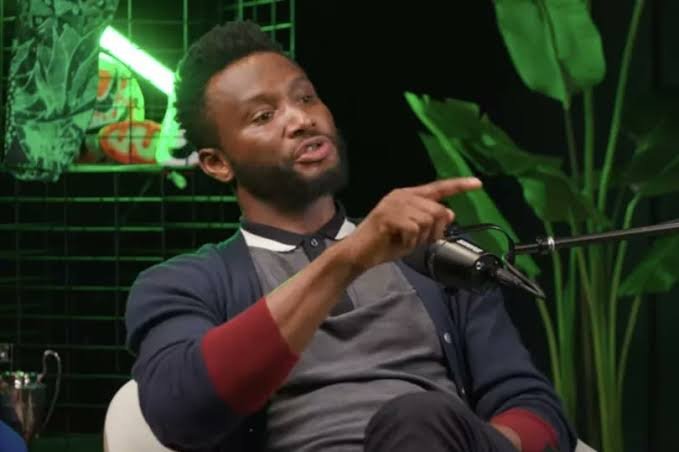
While social media has been flooded with criticism labeling the striker’s behavior as unprofessional, former Chelsea legend and national team icon Mikel Obi has stepped forward to offer a different perspective. Speaking on his popular “Obi One Podcast,” Mikel defended the striker’s aggressive temperament, arguing that this “warrior” spirit is exactly what has made Osimhen a world-class talent. Mikel suggested that the high-intensity football culture in Turkey, where Osimhen currently plays, rewards players who show visible hunger and a willingness to fight for every ball.
Mikel explained that for a striker of Osimhen’s caliber, the frustration often stems from an insatiable desire to maximize every opportunity. Having scored twice already in the match, the forward was clearly hunting for a hat-trick, and Mikel noted that top-tier strikers rarely apologize for being greedy for goals. He emphasized that the best versions of Osimhen come to the fore when he is playing on the edge, battling defenders and demanding the absolute best from those around him.
The former midfielder went as far as to say that he found the confrontation refreshing, noting that the national team has lacked that level of internal accountability for years. Mikel criticized the current era of football for being “too nice,” where players are often seen as too comfortable with one another. He argued that winning teams are built on a foundation of “nastiness” on the pitch—a environment where teammates hold each other by the neck and demand that everyone performs their duty to the highest standard.
In Mikel’s view, the incident shouldn’t be seen as a sign of a fractured camp, but rather as a healthy display of passion. He reminisced about his own playing days, suggesting that heated arguments are a natural byproduct of elite sports. He insisted that as long as the players can reconcile off the pitch—sharing meals and maintaining friendships—the aggression shown during the ninety minutes of play is actually a tactical advantage that can drive a team toward a championship.
However, the Chelsea legend was not entirely uncritical of the younger star’s conduct. While he championed the on-field fire, Mikel drew a firm line at the “afters.” He expressed disappointment in Osimhen’s decision to stop exerting effort toward the end of his stint on the pitch and his abrupt exit to the dressing room. Mikel reminded the audience that no individual, regardless of their status or talent, is bigger than the green and white jersey of Nigeria.
The former captain pointed to the legacies of legends like Jay-Jay Okocha and Kanu Nwankwo to illustrate that players are merely temporary custodians of the national team’s pride. He suggested that while Osimhen is a humble and smart individual, he must learn to manage his exit more gracefully to ensure the team’s collective spirit remains intact. Mikel believes that the striker will eventually look back on the incident and realize that walking away from the team before the final whistle was a bridge too far.
Despite the criticism of his exit, the general sentiment from the veteran’s defense is one of protection. Mikel wants to ensure that the “lion-like” qualities that define Osimhen are not coached out of him in a misguided attempt to make him more polite. As the Super Eagles prepare for the high-pressure environment of the quarter-finals, the focus will now shift to whether this internal friction can be channeled into a more cohesive and even more dangerous attacking force against their next opponent.


