
NEWS
Islamic Clerics Disavow Terrorism and Call for National Unity at Landmark Lagos Summit
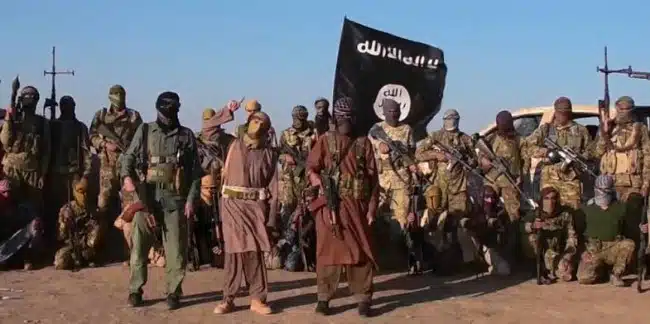
Global Islamic scholars and influential clerics have issued a definitive rejection of banditry and extremist violence, declaring that such criminal acts have no place within the tenets of Islam. This unified stance was the centerpiece of the 17th Annual Islamic International Conference, which concluded recently in Lagos. Organized by the Daaru Na’im Academy for Shariah Sciences, the four-day summit gathered over 20,000 participants and high-ranking scholars from the United States, Saudi Arabia, Europe, and across Africa to address the rising tide of contemporary security challenges.
The conference, themed around the jurisprudence of sound creed, served as a platform for leaders to reclaim the narrative of their faith from fringe groups. Sheikh Abdul Mojeed Imran Eleha, the Director-General and Chief Imam of Daaru Na’im, was vocal about the damage caused by misconceptions. He argued that the current wave of insecurity is often exacerbated by individuals and groups who claim affiliation with Islam but operate in direct opposition to its authentic methodology. According to Eleha, these “hostile discourses” have created a landscape of confusion that must be corrected through rigorous education and a return to the “pristine” teachings of the Quran.
International voices echoed this sentiment, emphasizing that the core of Islamic law is built upon the sanctity of human life and the pursuit of justice. The Deputy Mufti of Uganda, Sheikh Mohammad Ali Wahiso, noted that the global community must recognize Islam as a religion of peace. He specifically pointed to the danger of the digital age, where young people often fall victim to radicalization or misinformation found through unverified online sources. Wahiso called for a modernized approach to religious scholarship, urging clerics to utilize technology to provide sound guidance that can compete with the “misinterpretations rendered through Google.”
Domestically, the conference focused heavily on the social fabric of Nigeria. Professor Abdul Mojeed Rasaq Alaro of the University of Ilorin delivered a poignant reminder that national survival depends on mutual respect. He asserted that no faith should be imposed on another, citing the Quranic principle that there is no compulsion in religion. Alaro urged Nigerians of all stripes to view one another as brothers and citizens first, suggesting that the “round table” of dialogue remains the most effective weapon against the fragmentation that threatens the country’s stability.
The legal and ethical implications of these teachings were further highlighted by Justice Kamaldeen Abdulateef, the Grand Kadi of the Kwara State Sharia Court of Appeal. He observed that the conference’s long-term value lies in its influence on the younger generation. By fostering disciplined behavior and encouraging positive relationships between Muslims, non-Muslims, and the government, Abdulateef believes the foundation for a more transparent and less corrupt society can be laid. The presence of traditional rulers, ambassadors, and government representatives at the event signaled a high level of institutional support for this moderate religious agenda.
However, the conversation around Nigerian security remains complex and deeply divided. Even as scholars in Lagos preached for unity and global cooperation, other voices within the Islamic community have raised sharp criticisms regarding the government’s security strategies. Sheikh Ahmad Gumi, a prominent and often controversial figure, recently challenged the Federal Government’s reliance on international military support. In a sharp contrast to the collaborative spirit seen in Lagos, Gumi called for an immediate end to military cooperation with the United States.
Gumi’s concerns stem from recent US airstrikes on Nigerian soil, which he argues undermine national sovereignty and risk polarising the country along religious lines. While he acknowledged that the fight against terrorism is religiously permissible, he insisted that such efforts must be led by “clean hands.” He expressed skepticism regarding American motives, suggesting that foreign intervention often masks hidden political agendas that could eventually turn Nigeria into a theater for global proxy wars.
Despite these differing perspectives on foreign policy and military tactics, the consensus from the Lagos summit remains a powerful counter-narrative to extremism. The scholars concluded that while political and military solutions are debated, the spiritual and moral battle must be won through the promotion of a “sound creed.” They argued that by aligning religious practice with ethical discipline and national loyalty, the country can insulate its youth from the lure of banditry.
The event ended with a call for Nigerian scholars to move past their internal divisions and prioritize collective engagement over the “discord” often found on social media. The leaders emphasized that the preservation of the Nigerian state is a shared religious duty. By focusing on the principles of tolerance and the protection of all citizens, they hope to ensure that the “pristine Islamic creed” remains a pillar of order and a source of peace rather than a tool for division.