
BUSINESS
Fuel Markets Shake as Dangote Refinery Gears Up for Strategic Shutdown
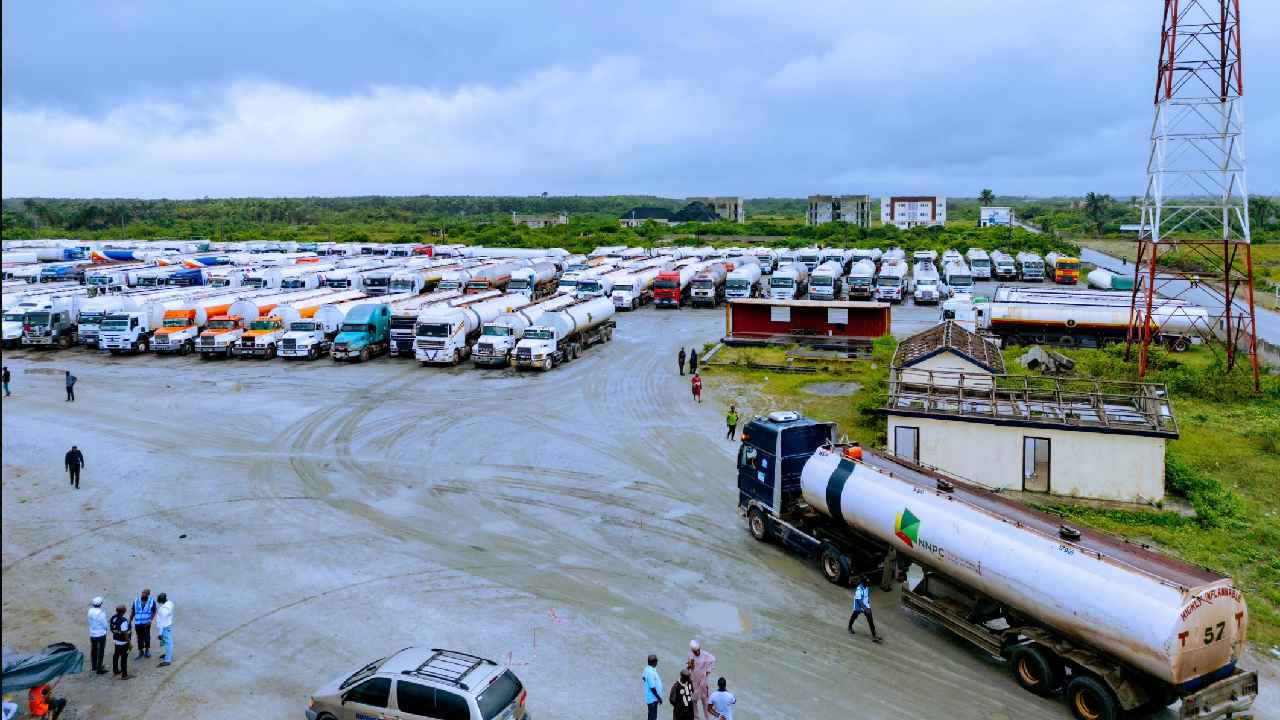
Nigeria’s downstream petroleum sector is facing a fresh wave of price volatility as private depot owners and marketers hike ex-depot petrol prices in anticipation of a planned maintenance shutdown at the Dangote Refinery. By Saturday afternoon, market surveys revealed a sharp upward adjustment in prices, with several major depots now selling Premium Motor Spirit (PMS) at approximately N800 per liter, a significant jump from the previous range of N740 to N780.
The sudden price surge centers on the refinery’s Residue Fluid Catalytic Cracker (RFCC)—the critical unit responsible for gasoline production. While the 650,000 barrel-per-day facility has been a beacon of hope for domestic energy security, the upcoming “turnaround maintenance” has triggered speculative hoarding and precautionary price adjustments by middle-tier distributors. Despite the hike at private facilities like Rainoil, Optima, and AYM Shafa, the Dangote Refinery itself maintained a gantry price of N702, while Aiteo held at N740, creating a widening gap between primary supply and secondary distribution.
Devakumar Edwin, Vice President of Dangote Industries, confirmed the operational shift, explaining that the move is a strategic “debottlenecking” exercise rather than a response to a crisis. Speaking via Platts (S&P Global), Edwin noted that production levels in several departments have already exceeded 100 percent of their nameplate capacity. The goal of the brief shutdown in early January 2026 is to remove lingering production constraints, ultimately paving the way for the refinery to ramp up its overall output to 700,000 barrels per day.
This maintenance window comes at a delicate time for Nigerian consumers, who have enjoyed a brief period of relative price stability following a fierce “price war” between the state-owned NNPC and the Dangote plant in late 2025. As of Saturday, retail pump prices across the country remained fragmented, swinging between N739 and N910 per liter. While major stations in Lagos and Abuja have attempted to keep prices below the N800 mark, the new ex-depot rates suggest that another round of retail increases may be imminent as marketers look to protect their margins.
Industry analysts suggest that the market’s reaction highlights Nigeria’s continued “Dangote dependency.” While the refinery has successfully transitioned the country into a net exporter of diesel and jet fuel, any hint of downtime in its gasoline unit immediately sends ripples through the domestic supply chain. To mitigate the impact, the refinery reportedly ramped up production throughout December to build a reserve buffer, though marketers remain wary of how long these stocks will last if the maintenance extends beyond the projected week-long window.
For the average Nigerian, the price hike serves as a reminder of the fragility of the post-subsidy fuel market. With the Crude Distillation Unit (CDU) also scheduled for a brief pause this month, the government and regulators are under pressure to ensure that the “temporary” shutdown does not morph into a full-blown fuel scarcity. As the refinery works toward its long-term goal of hitting 1.4 million barrels per day, the current price fluctuations are seen by many as the “growing pains” of a nation striving for total energy independence.


