
NEWS
Gumi: Herders Need Schools, Not Missiles
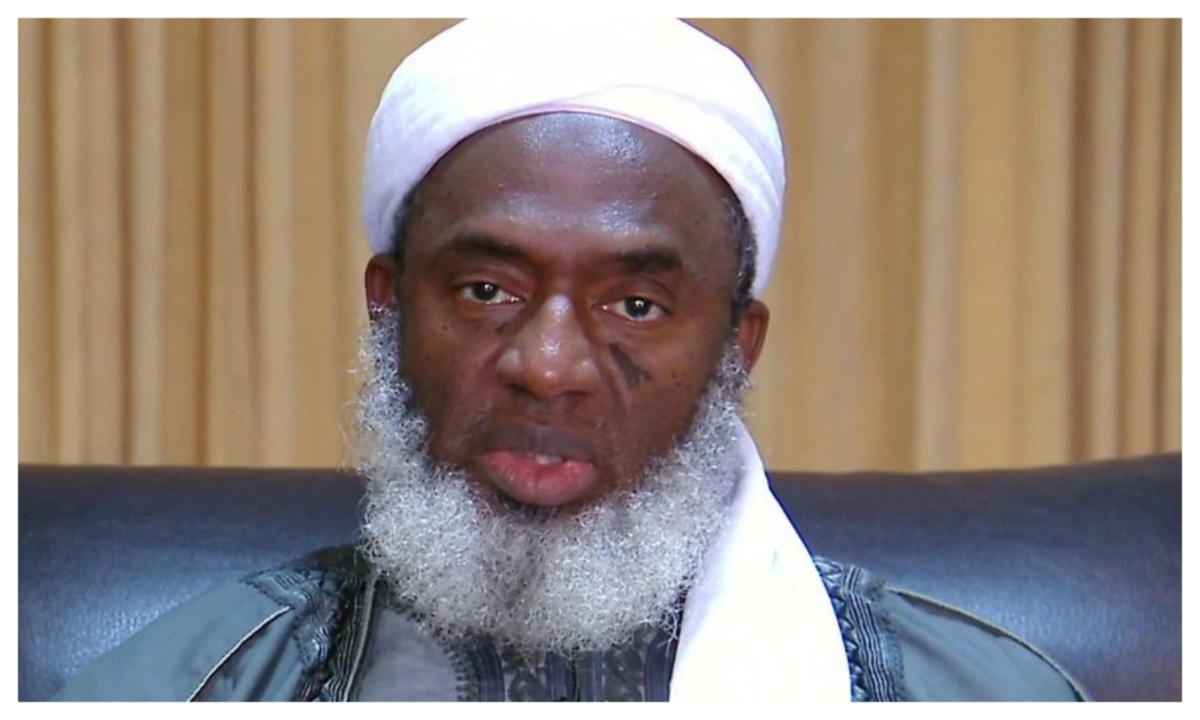
The controversial Islamic cleric, Sheikh Ahmad Gumi, has added a sharp, pedagogical twist to the fallout of the recent United States military intervention in Sokoto State. Reacting to the Christmas night airstrikes authorized by President Donald Trump, Gumi argued that the millions of dollars spent on advanced weaponry would be better served if invested in the education and basic welfare of the nomadic herders in the region.
The cleric’s comments were sparked by a viral video showing a Fulani man discovering the massive shell of a US missile in an open field. Gumi expressed deep concern over the scene, noting that the man’s curiosity in handling the debris highlighted a profound lack of awareness regarding the lethal danger of unexploded ordnance. For Gumi, this ignorance is a symptom of a much larger crisis that cannot be solved by kinetic force.
“Most herdsmen need deliverance from ignorance and themselves, not bombardment,” Gumi stated in a pointed social media post. He noted that the individual in the video appeared to lack even a basic understanding of Islamic creed or the technical risks posed by modern munitions. To the Sheikh, the “fire and fury” of a $2 million bomb represents a missed opportunity to address the root causes of regional instability through structural development.
Gumi, who has previously established schools for herders as part of his own outreach efforts, challenged the logic of high-cost military hardware. He maintained that the cost of a single missile strike could easily fund the construction of multiple schools and essential amenities that would integrate herders into a modern, educated society. In his view, the path to peace is paved with literacy and social inclusion, not with high-altitude precision hits.
The airstrikes in question, which targeted the ISIS-Sahel and Lakurawa terrorist groups, have become a flashpoint for debate since they were first announced on Truth Social. While the Nigerian government, under President Bola Tinubu, has confirmed that the mission was a coordinated effort with the full approval of the local administration, critics like Gumi argue that the strategy overlooks the human element of the conflict.
The Nigerian authorities have maintained that the strikes were necessary to flush out “terrorist scum” operating within the Bauni forest. However, Gumi’s critique shifts the focus from the insurgents to the surrounding community. He suggests that as long as the rural population remains uneducated and disconnected from the state, they will continue to be vulnerable—either as recruits for terror groups or as unwitting victims of the very bombs meant to protect them.
The cleric’s stance is a direct challenge to the “guns-a-blazing” approach favored by the Trump administration. By juxtaposing the price of a missile with the cost of a classroom, Gumi is calling for a paradigm shift in how both Abuja and Washington handle the security challenges in Northern Nigeria. He believes that the real “deliverance” for the Sahel lies in books and healthcare, rather than in the “perfect strikes” celebrated by military officials.
As the US Department of Defense warns of “more to come,” Gumi’s appeal for a humanitarian-first approach adds a complex layer to the national discourse. The debate now moves beyond the effectiveness of the Tomahawk missiles to a fundamental question: can a nation truly be bombed into security, or must it be educated into stability? For now, the Sheikh’s message remains clear—invest in the mind, or continue to pay the price of the bomb.

