
NEWS
Fubara Welcomes Security and Federal Chiefs for Critical Rivers Inspection
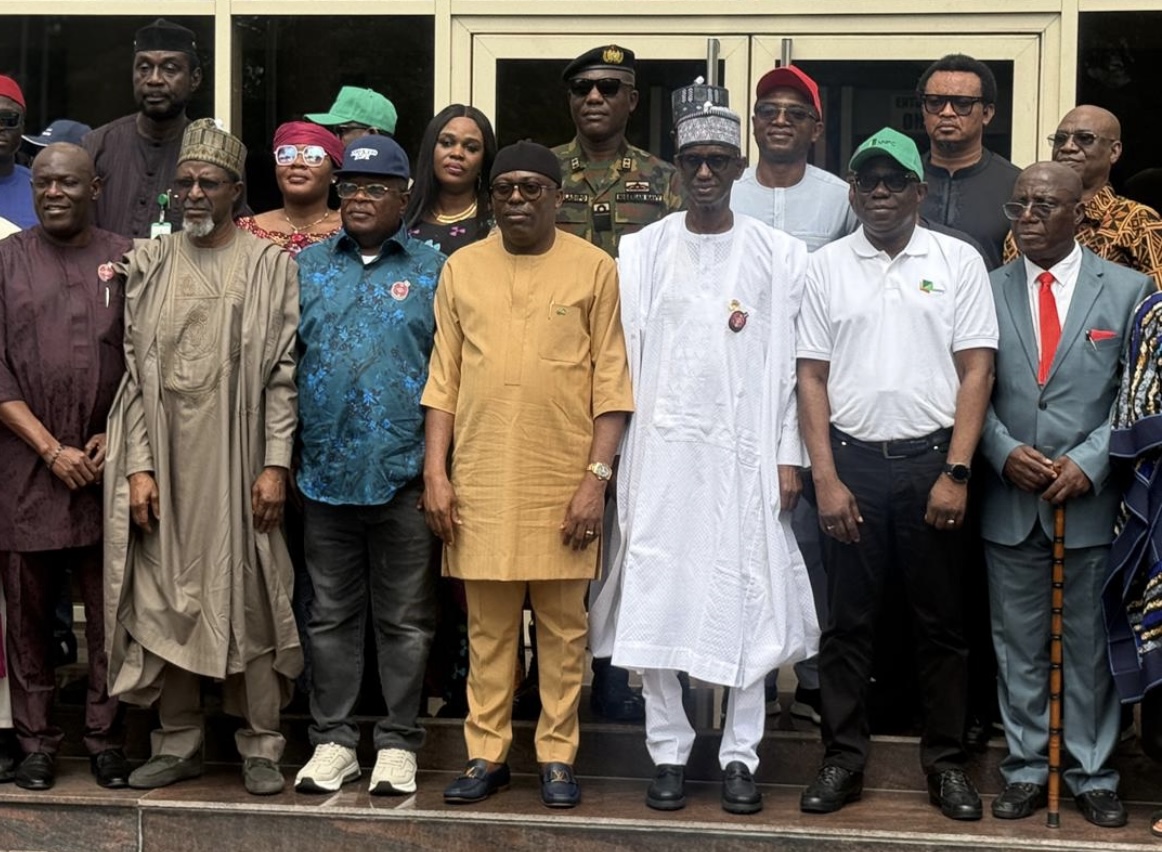
The political and environmental landscape of Rivers State took center stage on Monday as Governor Siminalayi Fubara opened the doors of the Government House in Port Harcourt to a high-powered federal delegation. Led by the National Security Adviser, Nuhu Ribadu, the visit signaled a renewed and coordinated push by the central government to address the long-standing infrastructure and ecological challenges plaguing the oil-rich region.
The presence of the National Security Adviser was bolstered by a heavyweight lineup of federal officials, including the Minister of Works, David Umahi, and the Minister of Environment, Balarabe Lawal. Joining them was the Director-General of the National Oil Spill Detection and Response Agency, Chukwuemeka Woke, a team composition that underscores the intersection of national security, environmental preservation, and physical development.
The delegation’s itinerary is as ambitious as it is critical, focusing on sites that have long been symbols of both the state’s industrial potential and its environmental struggles. At the top of the list is a comprehensive assessment of the ongoing construction work on the East-West Road, a vital artery for the nation’s economy that has faced years of delays and structural concerns.
Beyond transportation, the mission delves deep into the heart of the Ogoniland environmental crisis. The team is scheduled to visit the Yorla Oilfield spill site located in the Kpean Community, a move that suggests a more hands-on approach to monitoring the long-term impact of petroleum leaks on local livelihoods. This visit is particularly significant given the global scrutiny on the cleanup efforts in the Niger Delta.
The tour continues through a series of essential facilities, including the University of Environmental Technology in Ogoni and the Gokana Oil Facility and Hospital at K-Dere. These stops highlight a holistic strategy that links industrial operations with the provision of health and educational infrastructure for the host communities.
Governor Fubara, while hosting the visitors, expressed strong support for the federal government’s inter-agency synergy. He praised the National Security Adviser and the ministers for moving beyond rhetoric and engaging in field inspections that bring them closer to the realities on the ground. Fubara noted that such coordination is essential for managing the complex spillages that have historically strained the relationship between the state and the center.
However, the Governor also used the opportunity to sound a note of caution regarding the sensitive issue of oil exploration in Ogoniland. Addressing the federal delegation, he urged the government to exercise patience and maintain a transparent dialogue with the local population. Fubara emphasized that the resumption of drilling activities must be handled with care to avoid reopening old wounds.
His plea for patience reflects a deep understanding of the local dynamics in Ogoni, where history is marked by environmental activism and a demand for restorative justice. Fubara’s stance suggests that while the state is open to economic revitalization, it will not sacrifice the peace and well-being of its citizens for a hasty return to extraction.
The inspection tour also includes a visit to the Industrial Park site and the Taabaa General Hospital, further illustrating the government’s intent to balance industrial growth with social welfare. These visits are expected to provide the federal team with the firsthand data needed to streamline funding and project timelines for the region.
As the delegation moves across the state, the eyes of the residents are on the outcome of these inspections. For many in Rivers State, the visit of the National Security Adviser and his colleagues is viewed as a litmus test for the federal government’s commitment to sustainable development in the Niger Delta.
The synergy between Fubara’s administration and the federal visitors marks a potential turning point in the management of Rivers State’s resources. By focusing on both security and environmental health, the visiting team aims to create a framework where industrial progress does not come at the cost of human safety or ecological stability.
The outcome of this high-level mission will likely dictate the pace of infrastructure development and environmental remediation in the coming months. For now, the focus remains on the dirt and the water of the inspection sites, where the future of Nigeria’s oil heartland is being mapped out through rigorous assessment and cautious diplomacy.


