
NEWS
Aisha Buhari: Pneumonia, Not Cancer, Was Ex-President’s Final Adversary
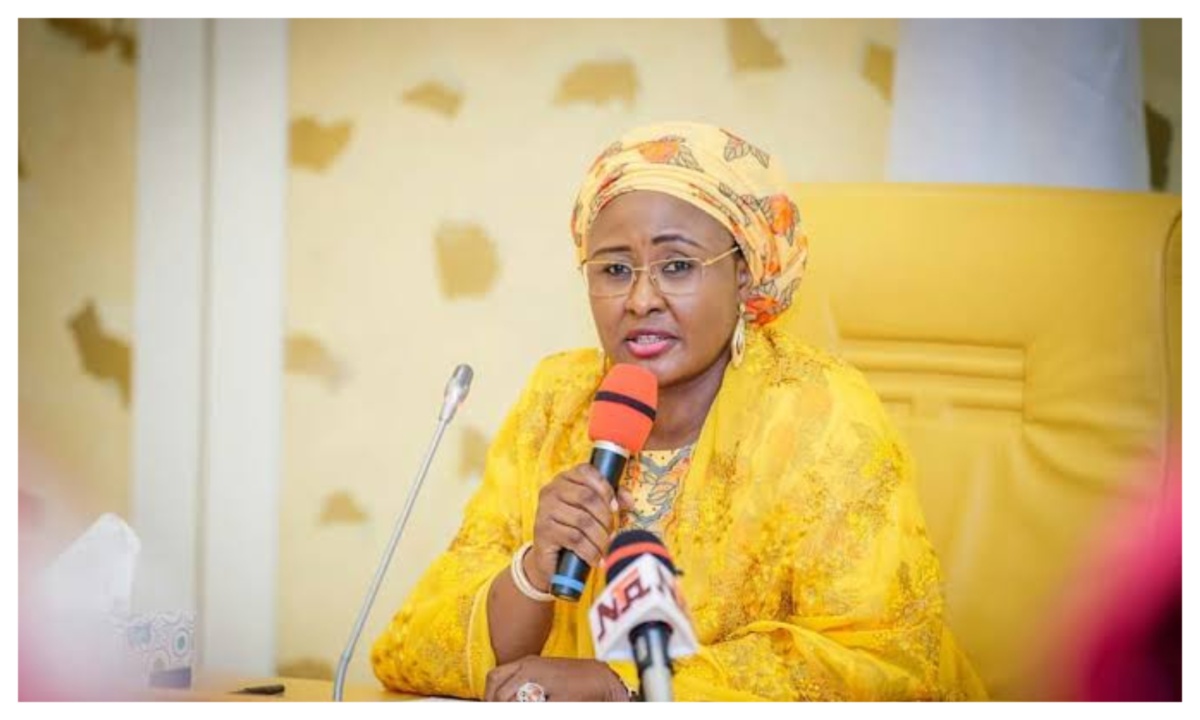
In a deeply moving and candid revelation, former First Lady Aisha Buhari has broken her silence on the specific cause of death of her late husband, former President Muhammadu Buhari. Contrary to widespread speculation and leaked reports suggesting a battle with lung-related cancer or leukemia, Mrs. Buhari clarified that it was pneumonia that ultimately claimed the life of the 82-year-old statesman during his final days in London.
The revelation is part of a newly launched, 600-page biography titled “From Soldier to Statesman: The Legacy of Muhammadu Buhari,” authored by Dr. Charles Omole. The book, presented at the State House in Abuja this week, offers an unflinching look at the private struggles of the man who led Nigeria both as a military head of state and a two-term civilian president.
Recounting the final chapter of their shared history, Aisha Buhari described the grueling sequence of events at the London Clinic. After leaving office in 2023, the former President’s health became increasingly fragile, leading to frequent transatlantic trips for medical care. His final admission saw him move from the Intensive Care Unit (ICU) to a regular ward before a terminal decline began. “The final days were difficult,” she noted, “the last three days were the worst.”
One of the most poignant sections of the biography involves the First Lady’s debunking of the cancer narrative. She revealed that multiple sputum tests conducted by the London medical team never indicated the presence of malignant cells. Instead, the diagnosis was acute pneumonia—a condition that, while common, proved “sovereign” due to the former President’s advanced age and a lifetime of physical toll.
Aisha Buhari traced the roots of this respiratory vulnerability back to her husband’s early military career. She believes the thirty months he spent as a soldier in the “bush,” particularly in the rain-soaked terrains of the South-South during the Nigerian Civil War, left an indelible mark on his lungs. Uniforms that dried on his skin and decades of exposure to harsh elements created a dormant weakness that resurfaced in his twilight years, exacerbated by the constant air-conditioning of modern executive offices.
The book captures intimate, granular details of the hospital room: the magazine in the President’s hand while in the ICU, the gentle banter between the couple, and a small joke about him being well enough to watch TV. Aisha recalled the struggle of trying to adjust his pillows to alleviate the strain on his lungs, a task that felt as heavy as their decades of shared history.
On July 13, 2025, at exactly 4:00 PM, while Aisha was briefly away to rest and pray, the former President’s breathing changed and then ceased. She described the moment of loss as a “tremor behind the door,” a quiet end to a life defined by discipline and controversy. Following his passing, his body was flown back to Nigeria and interred in his ancestral home of Daura, Katsina State, in accordance with Islamic rites.
The biography also addresses the atmosphere of suspicion that occasionally clouded the Presidential Villa. Aisha confirmed rumors that gossip within Aso Rock once led her husband to briefly mistrust her, to the point of locking his room and disrupting the strict nutritional regimen she had personally supervised for years. However, she noted that their bond ultimately remained the bedrock of his survival during his most difficult medical crises.
As Nigerians reflect on the legacy of Muhammadu Buhari, this medical clarification provides a sense of closure to a tenure often criticized for its lack of transparency regarding the President’s health. By identifying pneumonia as his “last adversary,” Aisha Buhari has replaced conspiracy theories with a humanizing account of a soldier whose oldest scars finally caught up with him.