
NEWS
Senate Greenlights 64 New Ambassadorial Envoys
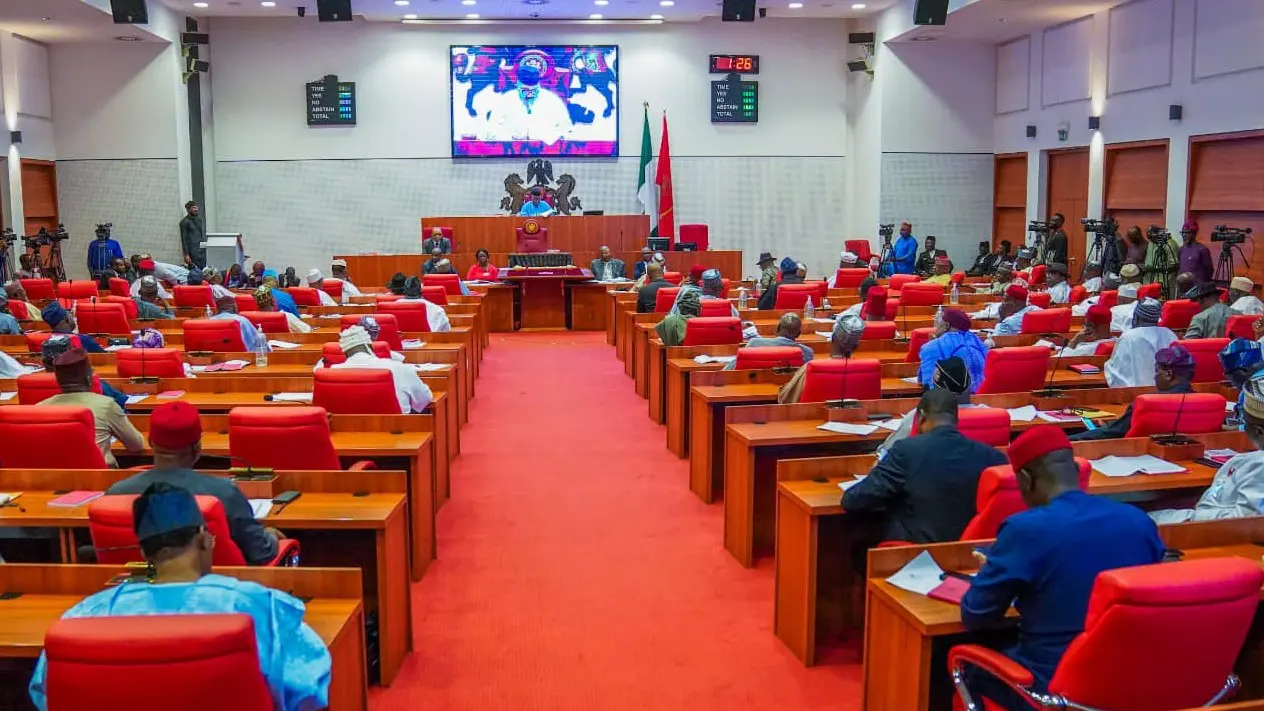
The upper legislative chamber has officially cleared the path for a new wave of Nigerian diplomacy, confirming 64 career and non-career ambassadorial nominees. This significant move follows a rigorous screening process conducted by the Senate Committee on Foreign Affairs, which scrutinized the credentials and backgrounds of the President’s picks to represent the nation on the global stage.
Senator Sani Bello, the committee chairman, spearheaded the presentation of the report on the floor of the Senate. He outlined the suitability of the candidates, emphasizing their potential to advance Nigeria’s strategic interests abroad. The lawmakers, after brief deliberations, moved to adopt the committee’s recommendations in their entirety, effectively authorizing the next phase of their deployment.
However, the confirmation session was not without its moments of legislative friction. A notable point of contention arose when Senator Sahabi Yau took to the floor to voice a significant grievance regarding the geographical distribution of the appointments. He pointed out a glaring vacancy: the total absence of a nominee representing Zamfara State.
Senator Yau’s observation touched on the sensitive issue of federal character, a constitutional principle designed to ensure equitable representation for all states in federal appointments. He urged his colleagues to take a formal stand and bring this omission to the immediate attention of the Presidency to ensure fairness for his constituents.
The atmosphere in the hallowed chambers reflected a mix of administrative progress and the need for regional inclusivity. Lawmakers listened as Yau argued that leaving a state out of such a critical diplomatic roster could send the wrong signal about the administration’s commitment to balanced governance.
In response to the growing concern, the Senate President moved to de-escalate the tension with a clarifying statement. He acknowledged that the list currently under consideration was not a final or exhaustive tally of the nation’s diplomatic corps. He assured the disgruntled lawmakers that the executive branch was still in the process of finalizing further names.
The Senate President further promised that the specific concerns regarding Zamfara State would be formally communicated to the President. He emphasized that the government is fully aware of the statutory requirements for representation and hinted that the subsequent batch of nominees would rectify the current imbalance.
This confirmation marks a pivotal moment for Nigeria’s foreign policy machinery, which has been awaiting a full complement of envoys to man various missions across the globe. With these 64 individuals now cleared, the Ministry of Foreign Affairs can begin the logistical process of assigning them to their respective posts in international capitals.
The mix of career diplomats—who have spent decades rising through the ranks of the foreign service—and non-career appointees—often drawn from the worlds of politics, business, and academia—is intended to provide a balanced approach to modern diplomacy. The career officers bring institutional memory, while the non-career picks often bring fresh political perspectives and specialized networks.
As the nation waits for the supplementary list to address the gaps highlighted by Senator Yau, the newly confirmed ambassadors are expected to undergo briefings on the current administration’s economic and security priorities. Their primary task will be to repair and strengthen bilateral ties that may have weakened during the period of vacancy.
The legislative oversight provided by the Senate during this process serves as a critical check on executive power. By demanding answers for the exclusion of Zamfara, the Senate reinforced its role as a watchdog for federal equity, even while ensuring that the wheels of international relations continue to turn.
For the 64 men and women who successfully scaled the hurdle, the focus now shifts from the Senate floor to the complexities of international statecraft. They will be stepping into their roles at a time when Nigeria is looking to bolster its influence within the African Union and improve its standing in the global trade arena.
The executive’s promise to deliver a more inclusive secondary list will be closely watched by political analysts and regional leaders alike. The pressure is now on the Presidency to ensure that the next set of names not only satisfies the professional requirements of the foreign service but also aligns with the political necessity of national unity.
In the coming weeks, the formal swearing-in and posting of these envoys are expected to dominate the administrative calendar. This influx of new diplomatic energy is seen as a necessary step in articulating Nigeria’s “4-D” foreign policy—Democracy, Development, Demography, and Diaspora—to a world that is increasingly looking toward Africa for partnership.